Ten radical Islamists expelled, re-detected in Ceuta following mass entry in July
Police identified ten Moroccans with entry bans due to jihadist radicalisation who entered Ceuta in late July. They were expelled again to Morocco.
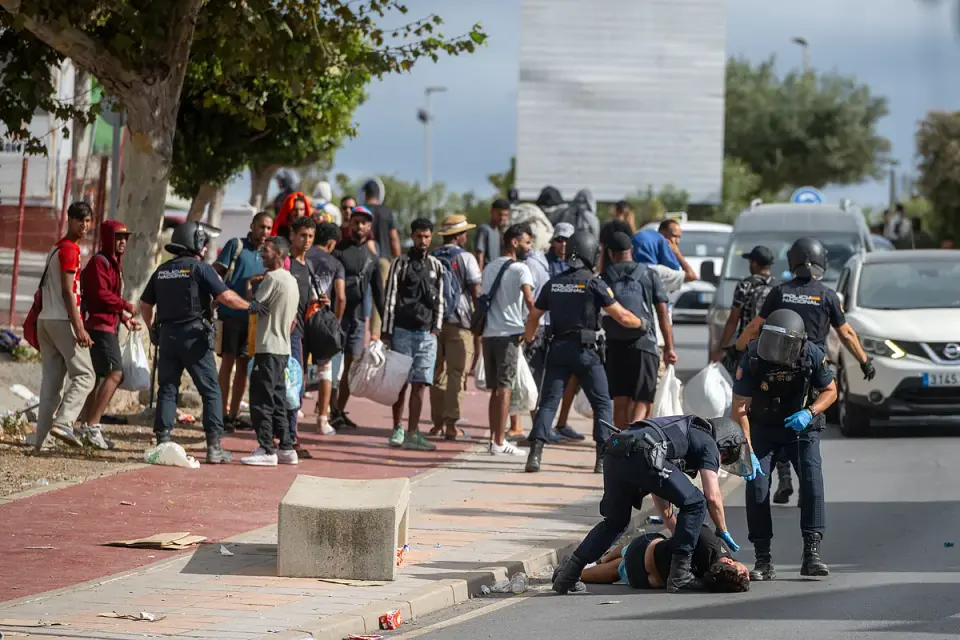
Ten radical Islamists with expulsion orders detected again in Ceuta
The National Police have identified in Ceuta ten Moroccan citizens who had previously been expelled from Spain due to links with Islamist radicalisation processes, according to El Mundo citing police sources. All of them were subject to entry prohibitions in force in Spanish territory, precisely because of their close ties to jihadist radicalisation. The ten men managed to enter Spain in late July, during the mass entry that occurred in Ceuta. Once identified, police proceeded to expel them again and return them to Morocco.
The same sources consulted by El Mundo emphasise that authorities are maintaining surveillance for possible profiles linked to violent extremism. Spain has "specific" mechanisms to detect radicalisation processes and prevent terrorist threats, and the National Police have carried out numerous operations in recent years against persons related to jihadist organisations. It was precisely those mechanisms that made it possible to confirm, in the ten cases detected, that the Moroccan immigrants had previously been subject to action and could not legally return to the country.
However, officers highlight the enormous difficulty involved in carrying out identifications given the volume of people who entered Spain by violating the border. Individual identification becomes much more complex when tens of thousands of people cross in practically simultaneous fashion, many of them without documentation or without their identity being able to be established with certainty. The subsequent work of the Security Forces consists precisely in reconstructing that information and determining the specific situation of each person.
An alert, not an active terrorist plot
The police sources themselves rule out that the ten individuals detected were preparing an attack or had recently committed a terrorist crime. They were located because police systems made it possible to verify that they had a current entry prohibition linked to radicalisation processes and, from there, the corresponding measures were executed. For those responsible for security, nonetheless, the cases constitute an alert signal about the risks that a mass and uncontrolled entry at the border can generate.
The National Police are the body competent in matters of documentation control and verification of entry prohibitions, whilst the Civil Guard carries out surveillance and control functions at the border perimeter. In cases where an identity is obtained, consultation of databases makes it possible to determine whether judicial orders, entry prohibitions, criminal records or alerts exist that require immediate action.
Ceuta, scene of constant pressure on security forces
At present, thousands of people who entered via the border remain in Ceuta, plunging the autonomous city into a situation that the sources themselves describe as difficult to address. The National Police have had to deal simultaneously with highly diverse tasks: attending to people in vulnerable situations, locating unaccompanied minors, guaranteeing public safety, investigating crimes and verifying the identity and administrative situation of those remaining in the city. The scale of the arrival turns each of those operations into an added challenge.
The accumulation of services and the need to maintain permanent surveillance are generating significant strain amongst officers, who are forced to multiply shifts and assume a workload far superior to normal. National Police and Civil Guard are working, according to the same sources, at the limit of their capacities. The police response to identify and expel persons with entry prohibition in Spain continues, and in counter-terrorism matters, the sources consulted insist that precision is essential.
Source: El Mundo