Giménez Abad's son, 25 years on: "Bildu contributes nothing to society"
Borja Giménez Larraz remembers his father's murder at the hands of ETA on 6 May 2001. According to ABC, he resents Bildu being an interlocutor of the Government.
Twenty-five years since the murder of Manuel Giménez Abad: his son closes a chapter
Borja Giménez Larraz was just 17 years old when he witnessed the three shots that ended the life of his father, Manuel Giménez Abad, president of the Aragonese PP, on number 9 Cortes de Aragón street in Zaragoza. It was Sunday afternoon, 6 May 2001. Father and son were heading together to the Romareda stadium to watch Real Zaragoza play against Numancia.
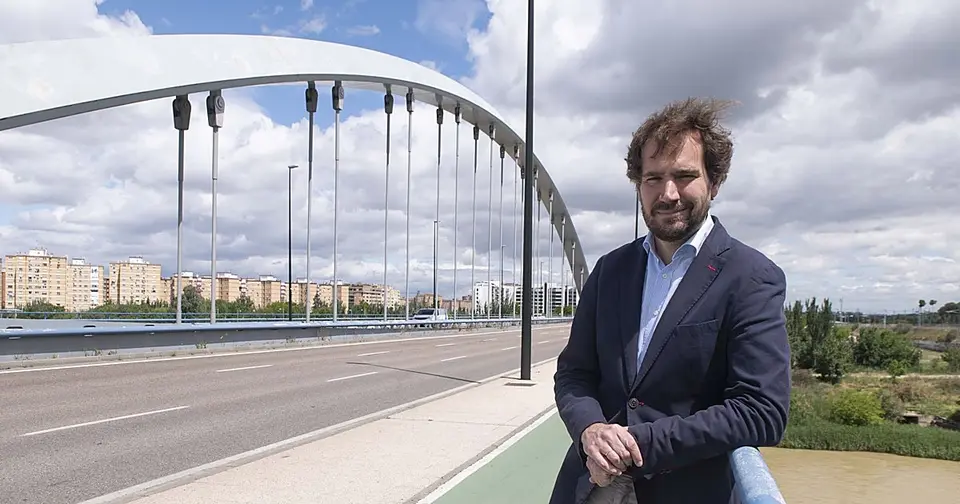
According to ABC, Borja has decided that the interview granted to that outlet shall be the last he gives on the occasion of the 25th anniversary of the crime. After weeks of tribute events in Zaragoza, Madrid and Brussels, the son of the murdered politician closes this chapter from the bridge bearing his father's name in the Aragonese capital.
"I was not raised in hatred, but Bildu contributes nothing"
Borja Giménez Larraz, now a PP Member of the European Parliament with more than ten years of work in Brussels, makes no secret of his political position regarding Bildu's presence in the institutional sphere. "I detest that Bildu is a privileged interlocutor of the Government," he affirms. In his view, those people "contribute nothing to society". Despite this, he acknowledges that he was not raised in hatred, and that he processed his grief with the support of his family and friends, rather than through therapy or psychoanalysis.
"Each family member went through their own path of pain. Different, each their own," he notes, recalling his grandparents, uncles, his mother and his older brother, Manuel Giménez Larraz, who, according to Borja, most resembles his father in character.
The perpetrator and the accomplice who was not convicted
The crime took 17 years to be cleared up. The perpetrator was identified as Mikel Carrera Sarobe, alias 'Ata', head of ETA, for whom no known photograph existed for years. This absence of imagery allowed him to use the same weapon—according to the terrorist organisation's internal agreements—to attack other politicians, journalists and agents. When Borja saw his photograph for the first time, he claims he had no doubt: it was the person who had shot in front of his eyes.
The woman who, according to the investigation, provided support to the commando, facilitated the pistol and fled with 'Ata' from the centre of Zaragoza was Miren Itxaso Zaldúa, alias 'Sahatsa'. However, she was not convicted for this particular attack as sufficient evidence was not found against her. She was subsequently arrested for her participation in other crimes and remains in prison. For Borja, each blow that partially dismantled the terrorist group represented a victory for years.
Years of lead: fifteen dead in 2001
At the tribute held on 4 May in Zaragoza, former Government president José María Aznar reviewed ETA's violence record during that period: 23 people murdered in 2000 and fifteen in 2001, among them Manuel Giménez Abad. Fifteen broken families in a single year.
Aznar also participated in the event alongside Jorge Azcón, the current leader of the Aragonese PP, and MEP Esteban González Pons, as well as the brothers Manuel and Borja Giménez Larraz. In Brussels, a delegation headed by both brothers paid tribute to the politician at the seat of Europeanism in which, according to those who knew him, Giménez Abad firmly believed. At that event a phrase was uttered that resonated among those present: "Democracy is fragile".
The documentary 'Por la espalda' and new details of the crime
On the occasion of the 25th anniversary, the Aragonese regional corporation—with the backing of the Government of Aragón and the City Council of Zaragoza, among other institutions—has premiered the documentary Por la espalda. It features Aznar, the then Interior Minister Mariano Rajoy, and the senior police officers who directed the investigation. The title alludes to the manner in which the attack was carried out.
The film also includes the testimonies of Giménez Abad's political rivals in the Aragonese Cortes: Javier Sada from the PSOE, Jesús Lacasa from Izquierda Unida and Bizén Fuster from Chunta Aragonesista. All agree on the same characteristic of the conservative politician: despite ideological differences, he always defended dialogue and tolerance towards those who were different. He was, they assure, the embodiment of what it means to "build bridges".
A foundation that transcends borders
The wound, Borja affirms, "never heals", although the family has managed to contain it in some way. The Giménez Abad Foundation, headed by his older brother Manuel, has transcended the national sphere and is also recognised outside Spain for its work in disseminating the democratic principles and values that Giménez Abad constantly evoked during his lifetime.
From the bridge on the third ring road of Zaragoza that bears his name, Borja Giménez Larraz gave one of the final tributes of this anniversary to his father, the man who that May afternoon in 2001 did not feel much like leaving home, but whom his younger son insisted on accompanying to the football match.
Source: ABC