Jury finds defendant guilty of murder in death of Juan de Dios M. in Recas
The jury unanimously found the defendant guilty of wilful murder. The prosecution reduced the sentence to 13 years and six months following the defendant's confession.
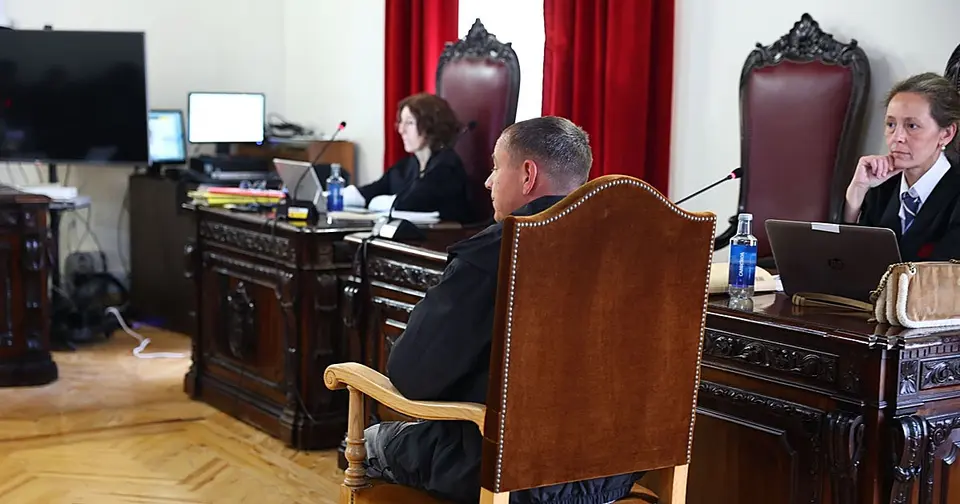
Unanimous jury: guilty of murder in Recas death
The jury of the Provincial Court of Toledo unanimously found defendant I. A. P. guilty of wilful murder in the death of Juan de Dios M., a resident of Yunclillos, whom he struck and inflicted fatal wounds in Recas (Toledo) on 24 June 2022. All the facts were considered proven by the nine jurors—four men and five women.
According to ABC, the prosecution modified its written conclusions on Tuesday following the defendant's confession, in which he declared for the first time on Monday and admitted the facts. The prosecutor dismissed the initial charge of murder and reduced the charges to wilful murder, as she was unable to prove either premeditation or cruelty.
Sentence reduced from 25 to 13 years and six months
The reduction is substantial: from the 25 years' imprisonment that the prosecution initially requested for murder, the sentence was reduced to 13 years and six months. The supervised release period was also reduced from ten to five years. The written submission does not include compensation, although it maintains the restraining order and prohibition on contact with the father of the victim, J. D. M. M., the only family member, now deceased.
At the conclusion of the second session of the trial, the defendant spoke: "I am very sorry and I am very remorseful," he said.
Defence acknowledges culpability with caveats
The defence counsel accepted the charge in light of her client's acknowledgement of the facts, although she clarified certain aspects of the prosecution. "I would like it to be clear that the victim, Juan de Dios M., was not struck by any flowerpot or any hammer, an object that has not been found in the vehicle or residence of the defendant, and that the gun used was a toy gun," the lawyer stated, adding that the declaration by I. A. P. appeared credible in light of the evidence presented during the session.
Both the defence and the public prosecution thanked the jury for their participation and interest throughout the proceedings.
Civil Guards describe discovery of body
The prosecutor waived the testimony of several Civil Guard officers, although five ultimately testified. All agreed that the victim had numerous blows to the head and back "from dragging". The officers also highlighted the defendant's cooperation in indicating the place where he had left the body, an area of difficult access with little traffic.
The body was found lying prone, tied at the feet. Next to the body was another similar rope which, according to the officers, had possibly been tied to the victim's hands. Despite the defendant cleaning the vehicle in which he transported Juan de Dios and washing all his clothing, investigators found traces of the victim's blood in the car.
Metal toy gun as main weapon
Regarding the weapon used, the officers clarified that the gun the defendant was carrying when he began striking the victim was fake or a toy gun, "but metal," and that a piece was missing, which was found next to the bench where Juan de Dios and his father were waiting for the bus.
The forensic experts who testified during the trial explained that this object could have caused the cuts on the victim's head. When questioned by the prosecutor, the experts stressed the "extremely severe beating" received, the massive subarachnoid haemorrhage—abundant bleeding around the brain—and the infratentorial haemorrhage that compressed the brainstem, a situation incompatible with life. The back presented linear erosions from the thoracic to the lumbar region, fractures of several ribs and severe damage to the kidneys and liver. "He died from the blows," the experts confirmed.
Jury deliberation
Once the trial sessions concluded, the judge handed the verdict form to the jurors, who began their deliberation behind closed doors.
Source: ABC