EncroChat brings down Strait drug traffickers: thousands of messages corner El Pantoja
Police infiltration of EncroChat has added 3,000 messages to the case of drug trafficker Jesús Heredia, held in provisional detention. Six cases opened in Andalusia are already being supported by the intercepted chats.
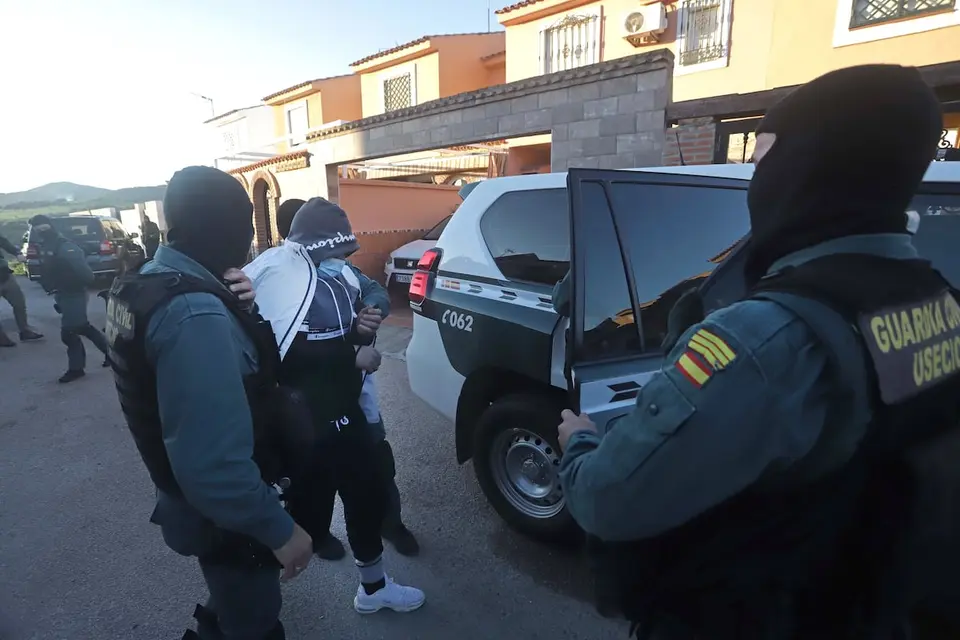
EncroChat collapses security for Strait of Gibraltar crime bosses
The summer of 2020 began turbulently for Jesús Heredia, known as El Pantoja, one of the main drug traffickers of the Strait of Gibraltar. At the end of May, the authorities arrested 36 members of his gang and he became a fugitive. Little more than a month later, he was arrested while eating at an Italian restaurant in Chiclana de la Frontera. Between these two events, on 13 June, EncroChat—the encrypted messaging platform used by European organised crime—alerted its users that it had been "infiltrated" by the police.
According to reports, it was precisely those days that proved decisive: several members of the network were exchanging messages commenting on a photograph that appeared in the press about El Pantoja's legal problems. That conversation has become a key piece of evidence to identify him as an EncroChat user, justify his provisional detention and further complicate his already entangled legal situation.
3,000 messages that change the investigation
Suddenly, "approximately 3,000 messages" from EncroChat were incorporated into Operation Barros, an investigation in which El Pantoja was not even listed as the main person under investigation until that moment, according to his lawyer, Manuel Morenete. The chats identify him as a possible user of the network—under a pseudonym—in conversations that openly mention drug shipments, transports from Morocco and money. As a result, in March last year, a few days after being arrested in another drug trafficking case, the Anti-Drug Public Prosecutor's Office of Cádiz obtained judicial approval to keep him in provisional detention.
The case of El Pantoja is not the only one affected. The anti-drug prosecutor for Andalusia, Ana Villagómez, estimates that at least six cases opened against drug traffickers have been strengthened with messages intercepted on EncroChat and another private network called Anon. Two of those cases are being heard in Algeciras, another two in Chiclana, one in Málaga and another in the National Court. In all cases, the information came through European investigative orders issued to France, whose police force, together with the Dutch police, was instrumental in achieving the infiltration of the platform.
The system that promised total anonymity
EncroChat was marketed as an encrypted communications solution on encrypted terminals equipped with a messaging application. "The server was in France. The company guaranteed anonymity, all users had nicknames, there was no location or IP address. They charged more than 2,000 euros per service," according to judicial sources close to the case. The downloaded data, with secure backup, have ended up in the hands of the National Police and the Civil Guard "so that they can try to identify the users of those phones," according to prosecutor Villagómez.
What surprised investigators was the level of detail in the transcriptions: "A lot of information comes out that they thought was secure. Boats on the water, photos of hashish, of money. Everything that they thought would never be intercepted," say the same sources. The package of messages covers the period between April and June 2020, when those responsible for the network alerted their clients to a breach caused by "governmental entities".
The drug traffickers had developed an extensive catalogue of euphemisms to communicate: women, strawberries, meteorological references or tides served to talk about drug boats loaded with hashish coming from Morocco. The presence of Strait traffickers on a network that cost more than 2,000 euros per service shows the economic and technological capacity of these organisations.
The defence questions the legal validity of the evidence
El Pantoja's lawyer disputes whether his client was even the user identified under the pseudonym: "I dispute that the user is him, but even if it were, these are drug shipments that cannot be attributed to him". Morenete also questions the legality of the procedure used to incorporate that data into ongoing investigations. "It is still very much in development. Especially after the 5 April ruling by the European Court that determines that mass storage is illegal," the lawyer specifies.
The defence teams of others involved in EncroChat-related cases have already filed appeals arguing that the data obtained constitute a prospective investigation—directed against the person rather than against a specific fact—which is expressly prohibited in Spain. "So far, the National Court has considered it valid, because the way the data was obtained in France is legal," explains prosecutor Villagómez.
Morenete does not share that interpretation: "Let's say 90 per cent are alleged drug traffickers, but there will be others who are not. The Civil Guard has sifted through what they received and slipped it into the investigations they already had. That is not what the Spanish legal system says".
The Provincial Court rejects the appeal
For now, the Provincial Court of Cádiz has dismissed the appeal against El Pantoja's provisional detention, which is based precisely on the EncroChat messages that have given a new turn to the case. The judges have refused to rule at this stage on whether those pieces of evidence are null or not. "But in principle, they give it validity," concludes Morenete. The substantive question—what legal value the intercepted messages will ultimately have—remains to be resolved in the various judicial bodies.
Source: El País