Former Spanish Minister José Luis Ábalos sentenced to 24 years in prison for corruption
Spain's Supreme Court has imposed a 24-year prison sentence on former Transport Minister José Luis Ábalos for corruption offences related to mask contracts during the COVID-19 pandemic.
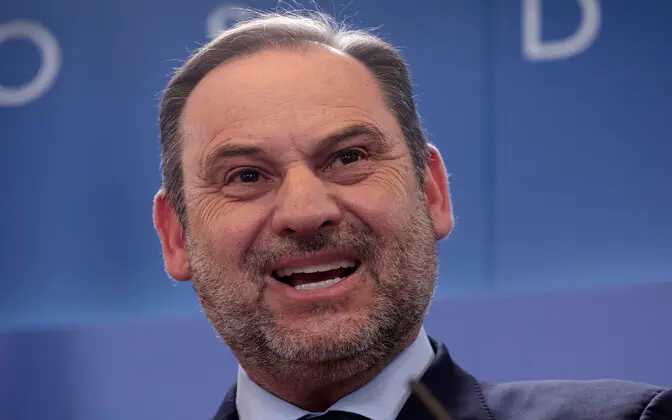
Former Spanish Minister José Luis Ábalos sentenced to 24 years in prison for corruption
Spain's Supreme Court condemned former Transport Minister José Luis Ábalos on Monday to 24 years in prison for committing corruption offences. It is the first judgment in a series of court cases linked to the Socialist Party, which currently governs the country.
According to the ruling of the high court, the exceptionally long duration of the sentence reflects the quantity of unlawful acts committed—including bribes derived from the purchase of protective masks during the COVID-19 pandemic—and the damage caused to public confidence by the abuses committed from his ministerial position.
The court noted that "when society perceives that those who hold power act driven by private interests or purposes alien to public service, this causes a loss of institutional legitimacy that puts at risk the stability of the entire system".
Nevertheless, the court clarified that, in accordance with Spanish law, the actual time Ábalos will spend in prison will not exceed approximately 16.5 years.
The judgment was handed down in a context in which more than a dozen people close to Government President Pedro Sánchez are being investigated or tried for alleged corruption offences, including his wife, his brother, and a former influential Socialist prime minister. To date, Sánchez's name has not appeared in any of these cases.
Sánchez came to power eight years ago after toppling a centre-right administration mired in corruption scandals, promising to clean up the country's political life.
Following disclosure of the ruling, a Government spokesman stated that the Government values "transparency, competence and integrity" and "regrets and unanimously condemns any behaviour that violates these principles".
Although public concern about corruption is considerably lower than a decade ago, polls indicate that this issue is again climbing the ranks among the main problems facing the country in voters' eyes, according to Luis Cornago-Bonal, a political scientist at the London School of Economics and adviser to the Teneo consultancy.
"Given that corruption accusations shadow both the Government and the opposition, Spain runs the risk of falling into a prolonged period of social discontent and deeper polarisation," the analyst warned.
Following Monday's judgment, the opposition again demanded Sánchez's resignation and the calling of early elections. The Government, however, has ruled out holding elections before its mandate ends in August 2027. For the moment, the opposition does not have sufficient backing to table a motion of no confidence.
"The Government president is responsible for the actions of his ministers," stressed the leader of the conservative People's Party, Alberto Feijóo, in a statement from the party's headquarters in Madrid.
The Supreme Court determined that in the awarding of a mask supply contract worth 13 million euros to companies linked to businessman Víctor de Aldama, corruption existed. De Aldama confessed his participation in the movement of illegal commissions and received a sentence of four and a half years in prison, suspended.
Likewise, the court established that Ábalos was paid 10,000 euros monthly to cover "permanent expenses" and that two people in his circle were hired by public companies, with housing costs also being covered in one of the cases.
Source: ERR
Source: ERR