Family of Arturo Ruiz takes Interior Ministry to National Court over 1977 murder
The brothers of the young man killed at a pro-amnesty demonstration challenge the ministry's silence about the police connections of the killer, located in Buenos Aires in 2023.
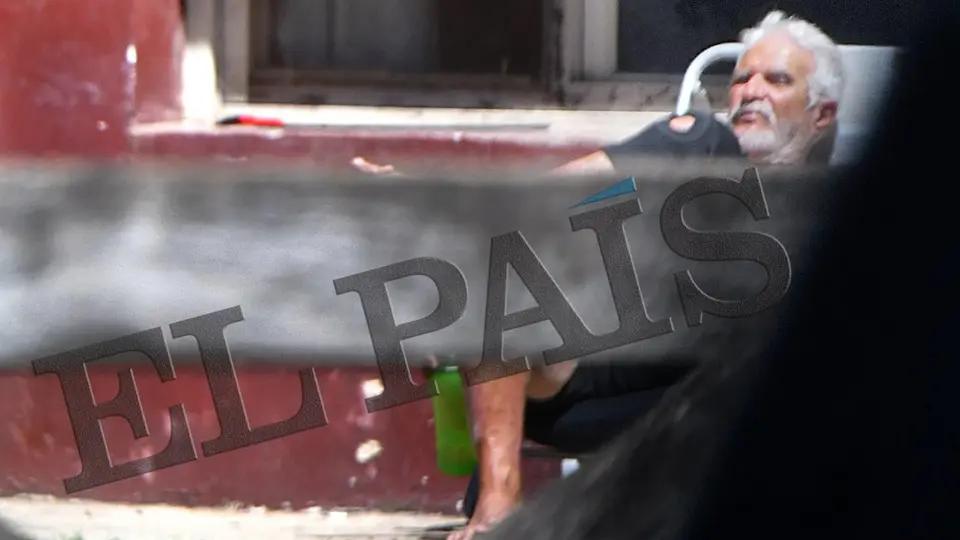
The family of Arturo Ruiz appeals to the National Court over Interior Ministry's silence on the 1977 murder
The brothers of Arturo Ruiz, the 19-year-old Granada student shot dead in Madrid on 23 January 1977 during a pro-amnesty demonstration, have filed an appeal before the National Court against the Ministry of Interior. According to El País, the legal action responds to the lack of response to a formal request for declassification of documents related to the murder and the alleged police connections of the perpetrator, José Ignacio Fernández Guaza.
Fernández Guaza, nicknamed El Posturas, fled Spain after the crime and has spent decades living outside the country under a false identity. In November 2023, El País located him in Buenos Aires. Without showing remorse, he acknowledged to the newspaper having shot the student: "He threw a stone at me. I grabbed the pistol and shot him in the heart [...]. Remorse? You are speaking to a person who has never regretted anything."
Links to the Civil Guard and false documentation
In that same interview, Fernández Guaza claimed that the Civil Guard told him to leave Spain after the crime and that the false documentation he has used to live since then was prepared by the "Spanish security services". He also recounted that, in the mid-nineteen-seventies, he was part of a unit that worked for the Civil Guard and killed ETA members in France. He added that in 1979 he received a visit from officials "from the Office of the Prime Minister" who asked him if he intended to "continue working". When asked about the absence of his identity card from Spanish police databases, he replied that there were "people" who said: "We are going to make him disappear."
During the original investigation of the crime, the fugitive's partner, his sister and other acquaintances had already declared that he had worked for the Civil Guard or the National Police. His own statements in 2023 came to confirm those testimonies.
Fernández Guaza had a known history in far-right networks. Connected to various plots during the decline of Franco's regime—including the Montejurra events—he maintained contacts with Italian neofascists such as Stefano Delle Chiaie, head of Avanguardia Nazionale, and served as bodyguard to Blas Piñar. On the day of Arturo Ruiz's murder, a squad burst into the demonstration shouting "Long live Christ the King!"
The only person convicted was the accomplice
The only individual tried and convicted in the case was Argentine Jorge Cesarsky, linked to the far-right group Triple A, prosecuted as an accomplice for having handed the weapon to Fernández Guaza. The National Court sentenced him to six years in prison for terrorism and illegal possession of weapons, although he served only one year in custody.
The declassification request
In November 2024, Miguel Ángel Ruiz, 72 years old, resident in Castellón, submitted to the State Secretariat for Security a request for "declassification of all documentation" concerning the murder of his brother. The letter asked for information about Fernández Guaza, his relations with police forces, the role of the Ministry of Interior—then headed by Rodolfo Martín Villa—the Guerrilleros de Cristo Rey unit that participated in the crime, and any state collaboration in the shooter's escape and his stay in Argentina.
"There are multiple indications of a possible connection between Fernández Guaza and the police and paramilitary services of the dictatorship, which makes especially intense the State's obligation to investigate the facts, provide truth about them and furnish all information", the letter states, recalling that at least four other individuals named in the case file had relations with the security forces.
Interior did not respond to the request within the legal timeframe. When asked by El País, the ministry declined to comment as it was "an open legal proceeding".
"Between 200 and 300 deaths during the Transition"
Miguel Ángel Ruiz is acting in the proceedings in representation of himself and his five other siblings—one of whom has already died—of Arturo. "We want to shed light on my brother's case and for that to serve to shed light on the between 200 and 300 deaths of the Transition at the hands of law enforcement and the far right", he said.
The family is represented by lawyer Amanda Meyer. To support the declassification claim, the appeal relies on the 2022 Democratic Memory Act, which recognises the "right of victims to the truth" and the "right of access to and consultation of archive documents" concerning the dictatorship. The argument also relies on the European Convention on Human Rights, the International Convention for the Protection of All Persons from Enforced Disappearance and the International Covenant on Civil and Political Rights, on the grounds that the statute of limitations for criminal prosecution in Spain does not exempt the State from its obligation to provide information to the families of victims of human rights violations.
Two paths open after statute of limitations
Following the 2023 revelations, the family attempted to reopen the criminal case, but the National Court denied the request as the offence was statute-barred. Two active paths remain, however: the judicial one in Argentina, where judge María Servini has begun steps to investigate the case, and the administrative one in Spain, which is now reaching the courts through the appeal against Interior.
Arturo Ruiz's murder took place one day before the Atocha massacre, in a week of violence that marked the final months of the Transition. His brothers have spent nearly fifty years demanding a response from the State.
Source: El País