Chief prosecutor of Ceuta: almost one sexual assault daily following July's mass entry
Silvia Rojas warns that Ceuta is on the brink of collapse following the mass arrival of approximately 70,000 people. Sexual assaults have soared exponentially since 30 July.
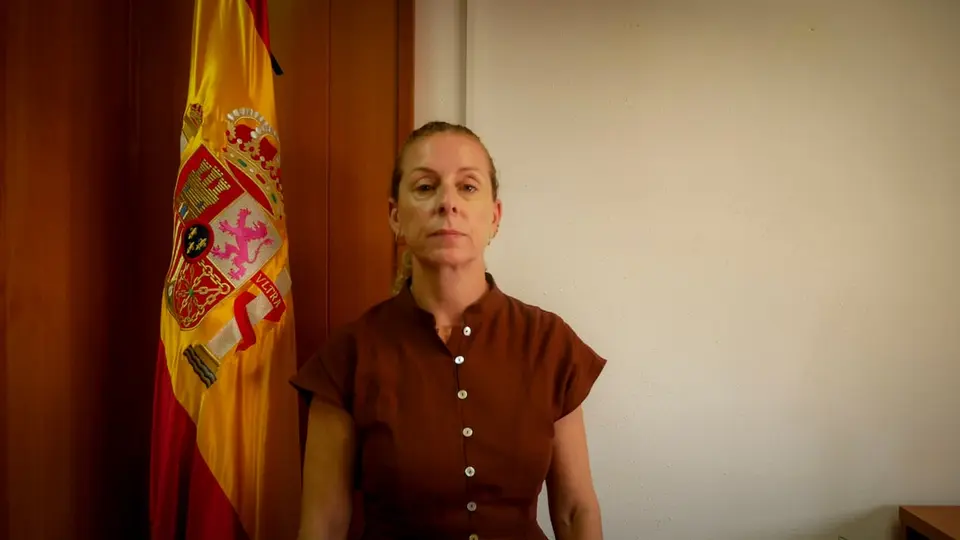
Ceuta at its limit: chief prosecutor warns of collapse and exponential spike in sexual assaults
Silvia Rojas, chief prosecutor of Ceuta, has served in that office for 22 years and describes the current situation as "an unprecedented milestone in Spanish history". In an interview published by El País, Rojas warns that the autonomous city cannot cope alone with the crisis generated following the mass entry of people recorded on 30 July, and expresses specific concern about the increase in sexual assaults since that date.
"I would venture to say that we are facing an unprecedented milestone in the history of our nation. Ceuta cannot cope with this situation on its own. It does not have the capacity," Rojas declared.
A small city overwhelmed by unprecedented figures
Ceuta has a population of approximately 80,000 inhabitants. The number of people who would have entered irregularly in the mass entry in July stands at around 70,000, according to figures handled by the Public Prosecutor's Office. Rojas sums it up bluntly: "One territory has entered another".
The prosecutor was appointed area chief in October 2020 and reappointed in November 2025. She experienced the previous migration crisis of 2021, but stresses that the current situation is not comparable: "The number of people who have entered irregularly into Ceuta does not approach the number of people who entered in 2021, and it has caused the collapse of most of our systems".
The systems for the protection of minors, healthcare and education are, according to Rojas, on the brink of collapse. This is, in her view, the fundamental difference compared to 2021.
Between 1,400 and 1,600 minors, with figures still changing
The exact number of minors present in Ceuta is not finalised. The figures being handled range between 1,400 and 1,600. Data recorded in the Minor Protection Service are around 1,475, although Rojas warns that more may be identified each day. The formal reception capacity of the autonomous city for minors is barely 29 places.
According to the 2025 Migration Contingency Royal Decree, an extraordinary situation is activated from 87 minors onwards. "So imagine what parameters we are in," the prosecutor noted.
Among the identified minors there are children aged between 10 and 11 years, as well as girls, although Rojas acknowledges that reliable disaggregated data on ages or distribution by sex are not yet available.
The solution: territorial distribution and return, not a political decision
For Rojas, the only way to relieve the pressure on Ceuta is through the distribution of minors among other autonomous communities on the peninsula, a mechanism provided for in the aforementioned Royal Decree. She clarifies, however, that this measure does not automatically imply permanent settlement in Spain.
"We cannot understand that, because minors are distributed territorially, this means they will remain permanently on the peninsula," she stressed.
The definitive solution, as she explains, falls to the Child Welfare Commission, a technical—not political—body that evaluates case by case the available options: return to the country of origin, family reunification if a relative has already crossed the border, or integration in Spanish territory. Both routes—territorial distribution and return—are compatible with each other and can advance in parallel.
Sexual assaults: "almost one a day" and many unreported
The aspect generating the most concern in the Public Prosecutor's Office is the increase in offences against sexual freedom. Since the mass entry on 30 July, sexual assaults have grown exponentially, according to Rojas. "There is almost one sexual assault a day. There is concern," she stated.
The prosecutor notes that victims are frequently minors or people in irregular situations, making them especially vulnerable. Furthermore, many do not report the assaults, either out of fear or because of their administrative situation in the city. The Public Prosecutor's Office has insisted on adopting protective measures for victims since the beginning of the crisis.
Along with sexual assaults, Rojas also mentions a surge in violent robbery. The public, as she describes it, perceives a real risk: minors who are on the street cannot frequent parks or public spaces normally.
Schools with perimeter security, school return in question
In the educational sphere, the prosecutor notes that the Ministry of Education has deployed security around schools. Initially the measure affected only public centres, but was subsequently expanded. Rojas warns that the freedom of movement of minors has been "restricted" and that the school return raises questions about how to guarantee adequate educational provision for all children present in the city whilst their situation is resolved.
Source: El País