Irregularities in Catalonia: fraud in Children's Affairs and Consell de Garanties under investigation
New lines of investigation point to 'phantom places' in supervised housing and fragmented contracts at the Consell de Garanties Estatutàries.
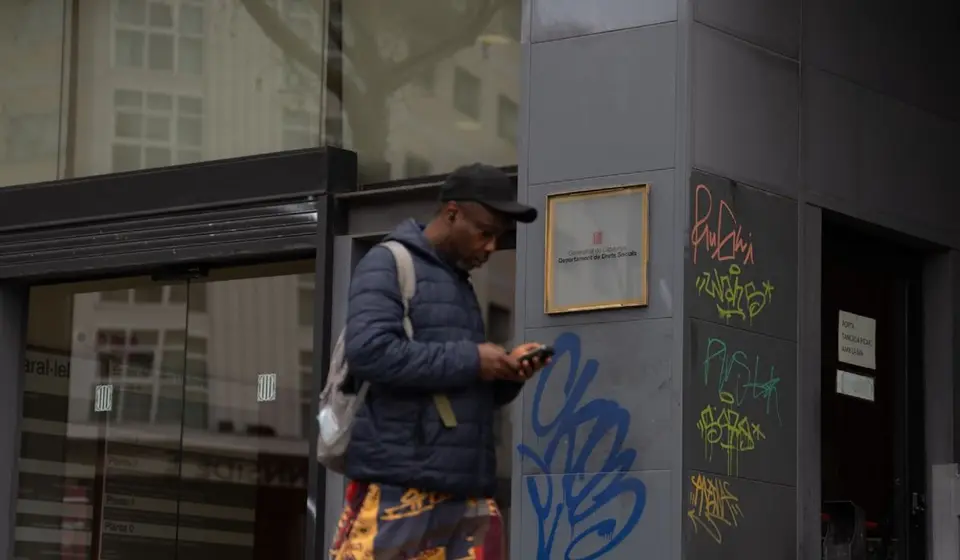
New investigations shake Catalan institutions over contract and supervised housing fraud
Vozpopuli.com reports that two high-profile Catalan institutions—the General Directorate for Children and Social Rights (DGAIA) and the Consell de Garanties Estatutàries—are at the centre of new suspicions of irregularities, broadening a history of scandals that had already affected the Generalitat during the tenure of former president Aragonès.
'Phantom places' in supervised housing
A new line of investigation opened by the Catalan Anti-Fraud Office focuses on the payment of places in supervised housing for young people no longer in care who, in reality, did not reside in those homes. Three former employees of the DGAIA, whose testimony was revealed by the media outlet El Mòn, indicate that the Generalitat paid for those places despite the homes frequently being half-empty. According to the testimony, the real situation was avoided being reported in order to continue receiving payment for places which, being unoccupied, required fewer resources.
The entities identified as main beneficiaries are the Resilis Foundation and Mercè Fontanilles, whose management for the Department has generated revenue of 350 million euros. Both have been removed from the supervision of benefits, although they remain in charge of children's centres, foster care places and supervised housing.
These new testimonies add to the complaints filed in June of last year by the Anti-Fraud Office itself, which calculated 4.7 million in irregular benefits to young people no longer in care and 167.5 million in the total payments under scrutiny within the DGAIA.
Fragmented contracts at the Consell de Garanties
At the same time, a recent report from the Court of Accounts has questioned the transparency of the Consell de Garanties Estatutàries, a body equivalent to a constitutional court within the Catalan autonomous sphere. According to the document from the audit body, the Consell fragmented contracts during the 2024 financial year for a series of services when, according to regulations, a single contract should have been formalised, given that the procurement covered recurring or foreseeable needs.
The report also details that, between 2022 and 2024, the body repeatedly contracted with four suppliers, with both the contract object and the award recipient repeating themselves. One of those suppliers was granted minor contracts for amounts exceeding the legally permitted maximum. The Court of Accounts concludes that the Consell breached articles 99.2 and 118.2 of the Public Contracts Act.
Leading the body at present are Enoch Albertí, María Jesús Larios and Francesc Esteve, appointed by Junts, ERC and the PSC respectively. The president during the audited period was Joan Vintrós, who remains linked to the institution in his capacity as conseller.
A pattern that spreads
The scandal arrives at a politically delicate moment for the Generalitat, as several opposition parties are considering bringing the Budget before the Consell de Garanties itself so that it can oversee its statutory validity, which could undermine the timetable envisioned by the Executive to approve it in early July.
The broader context refers to a longstanding debate on corruption in Catalonia. The confession of former president Jordi Pujol regarding the so-called convergent 3% and, more recently, the scandals in the DGAIA during Aragonès's tenure have eroded the argument that corruption was a phenomenon foreign to Catalan self-government. Parties such as ERC continue to deny having been implicated in any case, but the irregularities detected in top-level institutions make it difficult to sustain that distinction.
Source: Google News ES — Crime (es)