Trial over death of Esther López in Traspinedo begins on 2 February in Valladolid
The oral trial over the death of Esther López will begin on 2 February before the Provincial Court of Valladolid, with a jury, and will run until 8 March.
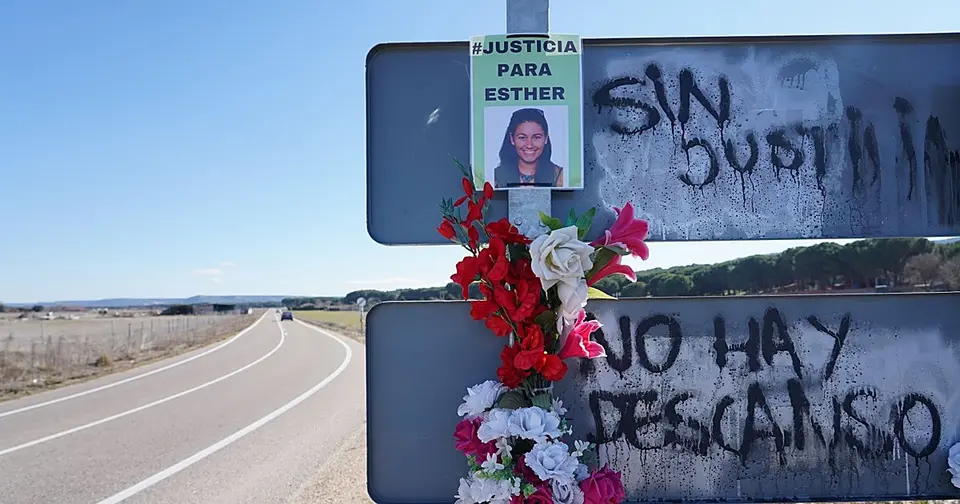
Date set for trial over death of Esther López: 2 February in Valladolid
The presiding judge in charge of the case has set 2 February as the start date for the oral trial over the death of Esther López, the young woman from Traspinedo whose body was found in a ditch in that Valladolid locality on 5 February 2022, after remaining missing for almost a month. This was reported by ABC, which states that proceedings will run until 8 March at the Provincial Court of Valladolid, "given the complexity of the case and the high volume of admitted evidence".
The trial will be held with a jury, as was planned. At 10.00 hours on the first day the final constitution of the Jury Court will take place and, presumably, the start of proceedings, according to the order issued on Wednesday by the judge.
The sole defendant and the prosecution requests
Óscar S. M. will sit in the dock, identified as the last person to see Esther López alive on the night of 13 January 2022. The Public Prosecutor's Office is requesting eighteen years in prison for him for the crime of wilful murder. The private prosecution, exercised by the young woman's family, raises that request to almost forty years for the alleged crimes of murder—or alternatively manslaughter—, unlawful detention, moral damages and failure to render assistance. The defence of the accused had requested dismissal of the case.
According to the Public Prosecutor's version, the facts date back to the night of 12 January 2022, when Esther and several friends, including the accused, visited different establishments in Traspinedo. At some point, the deceased and Óscar S. M. were left alone in his vehicle. Esther is said to have stated that she did not want to return to her parents' home because she had consumed alcohol and drugs, so the accused offered her the chance to spend the night at his family home in the Parque Romeral housing estate.
Once there, according to the public prosecutor, an argument broke out between them for unknown reasons that caused Esther to leave on foot. The accused is said to have followed her in his vehicle and struck her from behind at around 40 km/h. The Public Prosecutor's Office describes that hit as "intentional and with the intention to kill", and states that the impact did not cause death immediately, but rather that the accused left her "to die in agony". Moreover, the public prosecutor argues that the accused concealed the body and later deposited it in the ditch where it was found.
No DNA or blood traces in the chalet cellar
The case comes to trial after a prolonged investigation phase lasting more than five years. Proceedings had already closed the investigative phase and were awaiting a trial date at the Provincial Court when they had to be returned to the investigating court: the current owner of the chalet that belonged to the accused's family discovered a compartment—a "sealed cellar", according to the defence—which prompted a new round of investigations.
In April last year new samples were collected from that space. Investigators found no biological remains or DNA from Esther López among the 30 samples analysed.
In this final phase, the victim's family also decided to consolidate its prosecution and change legal representation. Lawyer Verónica Guerrero, who has intervened in cases of wide media impact such as those of Francisca Cadenas and Manuela Chavero, will assume the defence of the interests of Esther López's parents and sister.
Evidence admitted for the trial
In the same order, the presiding judge ruled on the evidence proposed by the parties, declaring "relevant, with certain exceptions", various testimonial, testimonial-expert, expert and documentary evidence that will be presented during the trial, according to information from the Superior Court of Justice of Castile and León (TSJCyL) in a statement.
The oral trial will mark the opening of a new phase in a case that shocked Spain and which has extended for more than four years among investigative procedures, subsequent discoveries and changes in the private prosecution.
Source: ABC