Penitentiary Institutions' battle against 'true crime' filmed from prison
The women convicted of the murder of Isabel Carrasco, president of the Provincial Council of León, were sanctioned with yard restrictions and loss of permits after participating in 'Death in León'. ABC analyses how the penitentiary authorities respond to these unauthorised recordings.
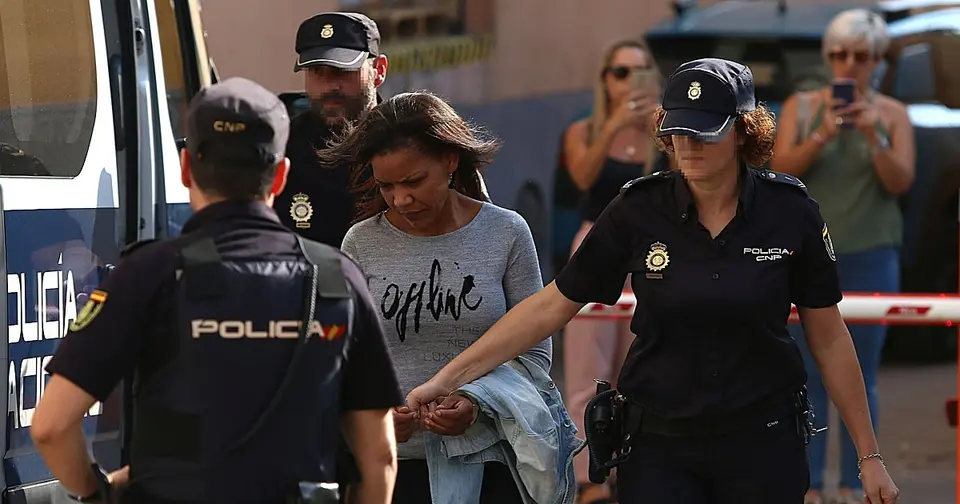
Light sanctions and outdated regulations: the penitentiary battle against 'true crime'
Montserrat González and Triana Martínez, mother and daughter convicted of the murder of Isabel Carrasco, president of the Provincial Council of León, have been sanctioned for participating in 'Death in León', a documentary filmed without authorisation at Villabona prison in Asturias. The sanction, classified as a "serious breach", prevents them from accessing the yard for a period and restricts their prison permits. The transfer that both had requested to Alcalá Meco prison in Madrid had already been approved and was not affected by the sanction.
According to ABC, this case is the latest episode in an ongoing dispute between Penitentiary Institutions and true crime content producers seeking direct testimony from high-profile inmates.
The Ana Julia Quezada case: communications intervention for six months
Patricia Ramírez, mother of Gabriel Cruz, the child murdered by Ana Julia Quezada, gave this debate the most visibility. On 7 May 2025, she held a press conference in which she reported the threats she was receiving from her son's murderer and raised concerns about the "defenselessness", "institutional and judicial lack of protection" and "violation of rights" set out in the Victims' Statute. Her statements managed to halt a documentary that was already underway and prompted a judicial investigation that charged several officials at Brieva prison in Ávila.
On 22 May, the prison's management decided to intervene in Ana Julia Quezada's communications. ABC has had access to the ruling, which was extended over several months. According to the document, the inmate's presence in the media had experienced a "considerable increase", with a higher volume of telephone calls and letters, some sent directly from various media outlets.
For reasons of prison security and ongoing judicial proceedings, Penitentiary Institutions applied article 75.1 of the penitentiary regulations, a temporary regulatory limitation. For six months, Quezada's "ordinary, special, telephone, written and package" communications were intercepted. The sending of letters and telegrams was limited to two per week. Communication with her lawyer was not affected.
Rosa Peral and the sanction from the Generalitat
Another case cited by ABC is that of Rosa Peral, convicted of the so-called "Guardia Urbana murder" in Barcelona. It was the Generalitat of Catalonia that sanctioned her for giving interviews without authorisation, classifying the conduct as a very serious breach. They restricted her telephone calls, transferred her to a different wing and limited her visits. Following the media impact generated by the release of a series about her case, Peral returned, according to ABC, to anonymity within the prison.
"These are not severe punishments"
Sources from trade union representatives in the prison sector, cited by ABC in the context of the documentary 'Your Abandonment Can Kill Me', question the actual effectiveness of the sanctions. "Nowadays with video calls it's very easy. There are 25 per week and they have time to make ten seasons", they note.
Regarding the application of article 75.1 to the Quezada case, the same sources point to a disproportionate use: "We would love it if this were also applied when an assault happens, but there are many people who assault, for example, a prison officer and they get off quite lightly".
Sanctions for participating in unauthorised recordings can include days of solitary confinement or suspension of recreational activities and yard time. For trade union representatives, these measures prove insufficient in practice. "That really is nothing because there are prisoners who instead of going out with the rest spend the afternoon watching a soap opera", they warn.
A regulation "completely outdated"
Prison officers have been calling for some time for a new legal framework. The central argument is that the current disciplinary system treats breaches of different severity equally. "You get punished the same for smuggling a playing card, so to speak, as for a mobile phone", the union sources consulted by ABC illustrate.
The comparison also extends to more serious conduct: "The regulation on this has become very archaic. An assault on a prison officer, where they have literally broken their face, could be considered the same as filming and interviewing a journalist to tell their life story", they emphasise.
With 'Death in León', the debate over penitentiary sanctions returns to the forefront. Penitentiary Institutions maintains an open front against unauthorised interviews and recordings, although without an updated legal framework to support more deterrent sanctions.
Source: ABC