Criminal gangs recruit Ceuta deportees as cocaine couriers on narco-boats
The Civil Guard detects that criminal networks are recruiting in Morocco immigrants who were deported from Ceuta and using them to transport cocaine towards the mainland Peninsula.
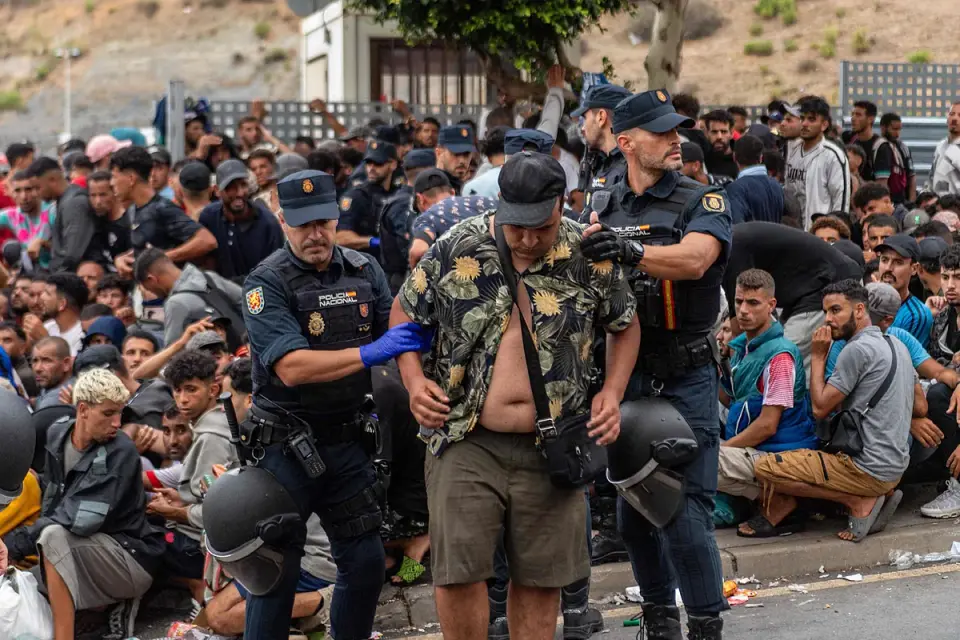
Ceuta deportees recruited as drug mules by narco-trafficking networks
The Civil Guard has detected that criminal organisations are recruiting in Morocco immigrants deported from Ceuta to use them as cocaine couriers in clandestine crossings to the Peninsula, according to reporting from El Mundo. The phenomenon emerges more than a month after the mass arrival in late July in the autonomous city and demonstrates the capacity of criminal networks to exploit migratory flows.
The mafias offer the returned immigrants the possibility of crossing to Spain without paying the cost of the journey in exchange for transporting rucksacks loaded with drugs. The immigrant does not pay in cash: he finances the displacement by means of transporting the narcotics that the organisation provides him with before embarking.
A model that reduces risk for the mafias
Criminal organisations thus obtain a double advantage. On the one hand, they outsource the first link in the cocaine transport chain to persons outside their structure. On the other, they minimise the exposure of their own members to the Spanish State's Police and Security Forces. Investigators from the Armed Institute point out, according to El Mundo, that the main concern lies in the capacity of these networks to locate persons already deported and offer them an apparently simple way out to return to Spanish territory.
The narco-boats simultaneously serve for the transport of people and for introducing the drugs that they carry on behalf of the organisations. The same structures linked to people-smuggling establish mechanisms of collaboration with drug-trafficking groups, sharing clandestine maritime routes to combine both illicit businesses.
Investigations open into the real scope of the method
One of the most complex aspects for investigators is determining the degree of voluntariness of the immigrants who act as mules. The fact that they do not belong to the criminal structure and that in some cases they may act under economic pressure or in the absence of alternatives makes it difficult to establish their level of conscious participation.
The Civil Guard is keeping investigations open to determine whether these are isolated cases or a method that the mafias are beginning to apply systematically to introduce cocaine into the Peninsula. The objective is to establish the real scope of the procedure before drawing conclusions about its extent.
Mounting pressure on Ceuta
The use of immigrants as drug couriers adds a dimension of organised crime to a crisis that had already forced security forces to reinforce their personnel. The autonomous city continues to be subjected to sustained pressure on its security services, social care, and child protection.
Three assaults on military patrols have been recorded, one of them involving Molotov cocktails. The military collective demands recognition of the status of law enforcement agents. The National Police, responsible for security in Ceuta, insists on the lack of personnel to face the magnitude of the problem.
Source: El Mundo