New judicial year 2026-2027 opens with judicial pressure on PSOE, Zapatero and Begoña Gómez
The judicial year begins on 10 September with multiple cases open against figures from the PSOE, whilst Kitchen and the Pujol family await sentence.
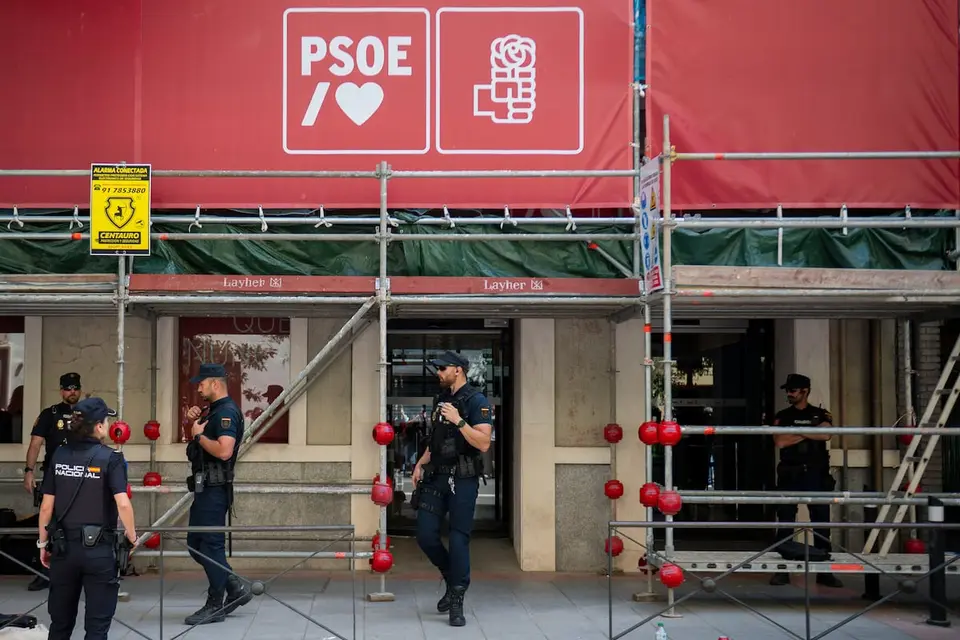
The PSOE's judicial cases mark the start of the 2026-2027 judicial year
The 2026-2027 judicial year begins with the same focus that characterised the previous one: a crowded agenda of proceedings affecting the PSOE and figures close to the Government. According to El País, the names of José Luis Rodríguez Zapatero, Begoña Gómez, Santos Cerdán and Leire Díez will dominate much of the courts' activity in the coming months.
The official opening ceremony of the judicial year will take place on Thursday 10 September at the Supreme Court, presided over by King Felipe VI. The president of the General Council of the Judiciary (CGPJ), Isabel Perelló, and the prosecutor general, Teresa Peramato, will deliver institutional speeches. The event marks a contrast with the tense start of the previous year, when Álvaro García Ortiz, then prosecutor general, was awaiting the opening of oral proceedings against him. The high court convicted him two months later to two years' disqualification for a disclosure of secrets affecting Alberto González Amador, partner of the president of the Community of Madrid, Isabel Díaz Ayuso. García Ortiz resigned before the sentence was executed.
Outside the PSOE, the Interior leadership of Mariano Rajoy's PP, headed at that time by Jorge Fernández Díaz, awaits the verdict in the Kitchen case. The Pujol family is awaiting the National Court's verdict on the origins of its wealth. And the leaders of the procés await Spanish courts applying the amnesty law following the backing of the European Court of Justice.
Plus Ultra case: Zapatero in the spotlight from 7 September
The unofficial judicial calendar begins on Monday 7 September with a hearing at the National Court. That day, Julio Martínez Sola, former president of Plus Ultra, is summoned to testify as an investigated party in the proceedings concerning the alleged influence peddling scheme allegedly led by Zapatero to obtain the bailout of the airline with public funds in 2021. The following day, 8 September, the company's former chief executive, Roberto Roselli, will appear.
Judge José Luis Calama summoned both men after receiving documents in which they implicate the former socialist president in obtaining the aid, in line with what was stated by Julio Martínez Martínez, owner of the Análisis Relevante consultancy, who claimed that the former Ferraz leader "set the steps to follow" in the proceedings that led to the bailout.
Zapatero's judicial future depends to a large extent on what these two former executives declare. Still pending is his own testimony on the origin of the jewels found in the safe of his office—valued at 1.3 million euros—the resolution of the appeal he submitted against a commission for a report on all his accounts, and the setting of dates for questioning of his daughters and his secretary, Gertrudis Alcázar, as investigated parties. The judge is also awaiting an "exhaustive" report commissioned to the National Police in early August on the evolution of ownership of the Venezuelan capital contributed to the company.
Leire Díez case: the National Court assumes expanded investigation
Judge Santiago Pedraz has been active during August, after receiving in mid-month the 14 volumes of the proceedings conducted by Madrid judge Arturo Zamarriego. He had begun investigating the former PSOE activist Leire Díez in July 2025 for alleged manoeuvres against the Operational Central Unit (UCO) of the Civil Guard and several members of the Anti-Corruption Prosecution. Those investigations will now be joined to those being carried out by the National Court, which in December initiated its own investigation of Díez for allegedly heading an alleged scheme to destabilise judicial proceedings affecting the PSOE, the Government and the circle of Pedro Sánchez.
Pedraz devoted two days in August to downloading the mobile phone of Juan Manuel Serrano, former president of Correos and former head of Sánchez's office. On 9 September the manager of the PSOE, Ana María Fuentes, and the former lawyer of the former ministerial adviser Koldo García, Ismael Oliver, are summoned to testify. The UCO maintains that Fuentes issued "false invoices" to justify payments actually intended for Díez.
On 10 September, the former director general of the Civil Guard Leonardo Marcos must appear in relation to the branch of the case investigating whether officers of the force received pressure to "keep a low profile" in the judicial proceedings concerning David Sánchez, brother of the president, for irregularities in his contracting at the Badajoz Provincial Council. The judge is also awaiting a UCO report on the PSOE's bank movements in six accounts during 2024 and 2025, as well as those of several companies and private individuals linked to the alleged scheme, including the former president of the Junta of Andalusia Gaspar Zarrías.
Begoña Gómez case: new written conclusions in September
In the courts of Plaza de Castilla, the proceedings against the spouse of the President of the Government move towards oral trial. Begoña Gómez's new lawyer will have to submit revised written conclusions in early September, following the Provincial Court's decision in July to expand the charges against her. The case, which began with complaints related to her professional and academic activity, keeps open the judicial pressure on the closest circle surrounding Pedro Sánchez at the beginning of the new academic year.
Santos Cerdán and an autumn with multiple judicial fronts open
The former secretary of Organisation of the PSOE Santos Cerdán also appears on the agenda for the coming months, adding another open front for the party in an autumn marked by the accumulation of proceedings. The 2026-2027 year is thus shaping up as one of the most heavily laden judicially for the PSOE in recent years, with cases in different phases—investigation, conclusions and awaiting sentence—which span the entirety of the party and its government circle.
Source: El País