Judicial pacts in Andalusia: how drug trafficking organisations impose their code of silence in the courts
Plea agreement sentences allow organised crime members to avoid oral trials and remain silent about their networks. Police sources denounce the laxity of the Spanish penal system.
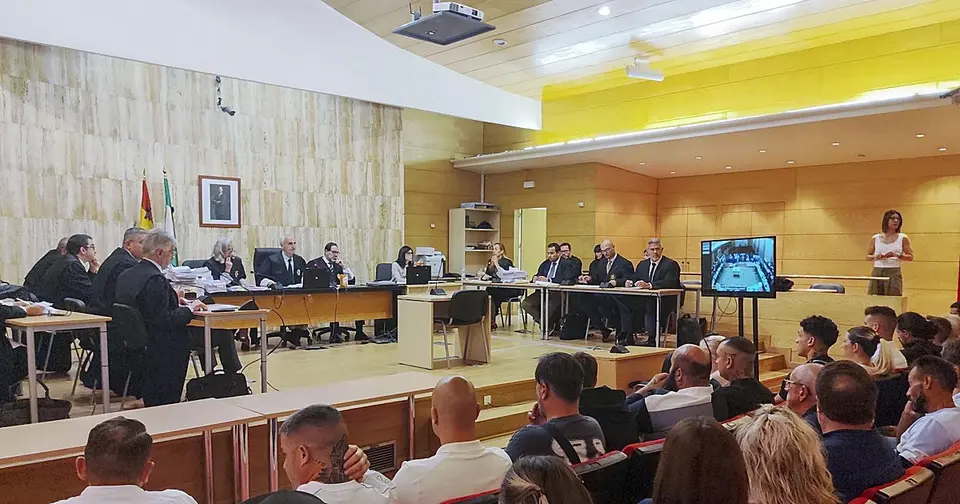
The code of silence arrives in Andalusian courts through sentencing agreements
In Sicily, the Cosa Nostra operated as a whisper between alleyways. "One does not speak of the mafia" is one of the golden rules of the old Italian families: everyone knows who is in charge, but no one exposes it. Breaking that code of silence can be punished by death and condemns the informer's family to social marginalisation. According to ABC, that same code has been transferred to the judicial chambers of Andalusia, where drug trafficking organisations have found in sentencing agreements a tool to protect their secrets.
Plea agreement sentences conceal an uncomfortable truth: no member of these organisations has to answer in public for their trafficking routes, their money laundering mechanisms, their suppliers or the internal logistics of their networks. An oral trial would demand exactly that. The pact avoids it. "These ones do not talk, they never say anything," agents acknowledge when they arrest hired killers or intermediate commanders of the organisations. The judicial agreement allows them to continue remaining silent.
A hired killer accepts 17 years rather than speak about the 'Kavac'
The mechanism has concrete consequences. A hired killer recently accepted a 17-year prison sentence following a murder without opening his mouth about his connection to the Kavac—a faction of the Balkan cartel—nor about the brutal war this group maintains with the Skaljari. The signature on the agreement protected him from any uncomfortable questions.
In Huelva, twelve drug traffickers were released onto the streets after negotiating a collective pact. Sources from the fight against organised crime in Andalusia consulted by ABC describe the phenomenon as habitual: "Pacts are offered and cases do not go to trial. It is a quick way to settle everything without having to go to trial, which requires extra work."
"I prefer to be caught here rather than in my country"
The phrase, in different versions, has been heard by all agents who have spent months or years pursuing the same mobster: "I prefer to be caught here in Spain rather than in my country." Police officers and Guardia Civil in Andalusia denounce the "laxity of the penal system" on matters such as attenuating circumstances for drug addiction or undue delays, which generate drastic sentence reductions. "In other countries drug consumption is an aggravating factor," the same sources point out.
The sources consulted by ABC indicate that British drug traffickers fear being detained in their country because of the severity of sentences, as do the French. The Moroccans, for their part, prefer an Andalusian prison to the jail in Kenitra. The ease with which defence lawyers reach agreements that leave their clients free or impose minimal sentences is part of that equation.
Million-euro fines counted as fifteen days
Every day, drug trafficking organisations close sentencing agreements which, discounting time in pre-trial detention and adding applicable attenuating circumstances, prevent them from entering prison. Several British drug traffickers recently detained with 1,300 kilograms of hashish reached a minimum agreement. On the day they left provisional prison, they had already travelled to Algeciras to test the quality of a supplier. A fine of two million euros was counted as 15 days in prison. No explanation. No questions.
Another group was intercepted on the Costa del Sol with 1,000 kilograms of hashish and automatic weapons. They had residency in Alicante and, when agents went to detain them, they rammed a police vehicle and caused an accident in which an innocent citizen was involved. The final agreement was one year in prison and expulsion from Spanish territory. "They solve it by entering with false documentation," sources familiar with the case point out.
"Drug trafficking has learned to coexist with police operations"
The assessment conveyed by the sources consulted by ABC is emphatic: "It is not a question of challenging the rule of law or the work of judges or prosecutors, but rather of opening a serious debate about whether the current system is truly prepared to combat mafia organisations with such enormous economic power." Many police officers have the feeling that drug trafficking has even learned to coexist with certain police operations and judicial processes, assuming arrests or economic losses as part of the criminal business itself.
A signature, an acceptance, and back to trafficking. This is how, according to these sources, the code of silence functions in the judicial system.
Source: ABC