Sánchez rejects accusations of systemic corruption in his circle following Ábalos sentence
The Spanish president defended the integrity of his government before Congress, two days after his former Transport Minister received 24 years in prison for corruption offences.
Sánchez rejects accusations of systemic corruption in his circle following Ábalos sentence
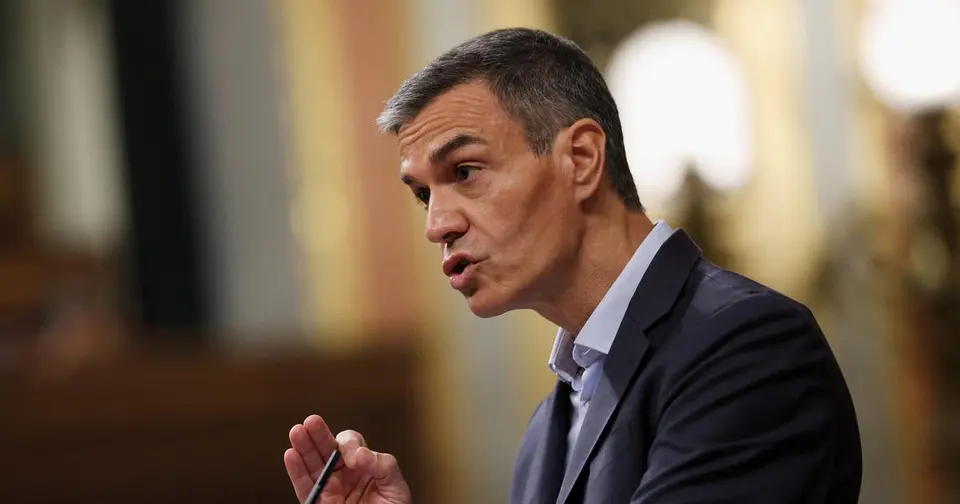
The head of the Spanish executive appeared before Congress on Wednesday to defend the integrity of his administration. Pedro Sánchez flatly rejected the existence of widespread "corruption" linked to his left-wing cabinet and the PSOE party he leads. The parliamentary intervention took place just 48 hours after José Luis Ábalos, who held the Transport portfolio, was sentenced to twenty-four years in prison for criminal activities related to embezzlement.
From the tribune, the socialist leader accused certain sectors of politics and the press of attempting to "mix everything up" with the aim of confusing public opinion. "I tell you that this feeling of widespread corruption does not exist," he declared forcefully. At 54 years old, Sánchez asserted that he had never been aware of nor had consented to unlawful conduct within his team, reaffirming the fight against corruption undertaken since he took office at La Moncloa in 2018.
That taking of office occurred following a vote of no confidence that ousted Mariano Rajoy's executive from power, which had been marred by multiple bribery scandals. "We are very calm," the president stated, although he acknowledged that neither his government nor the party he has led for eight years are immune to mistakes.
In recent weeks, a succession of legal cases has placed the socialist leader's circle under strain. Last Monday, his closest former political collaborator, Ábalos, received an exemplary sentence for abuse of authority. A few days earlier, on Saturday, Begoña Gómez—the president's wife—had her freedom of movement restricted: investigating judge Juan Carlos Peinado prevented her from leaving Spanish territory for fear of a possible flight, in the context of a case involving alleged trafficking of influence. Sánchez described this precautionary measure as excessive, claiming it "exceeds all reasonable limits".
The situation is complicated by other open fronts. The president's own brother is facing proceedings for the same influence-trafficking offences, whilst his political mentor, former prime minister José Luis Rodríguez Zapatero (2004–2011), is under investigation for alleged irregularities in financial assistance to an airline during the health crisis. The state loan of 53 million euros to Plus Ultra was described by Sánchez as "legitimate" and compliant with current regulations.
The opposition, led by conservative Alberto Núñez Feijóo, demands the president's immediate resignation. Pressure intensified in late May, when reports emerged of an alleged parallel structure within the PSOE dedicated to obstructing judicial investigations. Sánchez once again denied having any knowledge of such an organisation. Previously, the leader had apologised to citizens for the scandals and sworn that his party had never received irregular funds, a promise he reiterated in his appearance.
Despite the climate of attrition, the president remained firm in his intention to complete at least one more year of his term, ruling out early elections. Following his speech, Feijóo demanded the "dissolution" of the chamber and elections, saying: "Corruption is you." Santiago Abascal, of Vox, challenged him directly: "Do you not feel even a minimum of shame? Call elections now."
Source: Le Figaro
Source: Google News LU FR