Only three Basque teachers brought pupils to Terrorism Memorial; one faced boycott
A CEPC book reveals that barely three teachers from Basque public schools visited the Memorial of Victims with their pupils, and that 15% of schoolchildren justify ETA's violence.
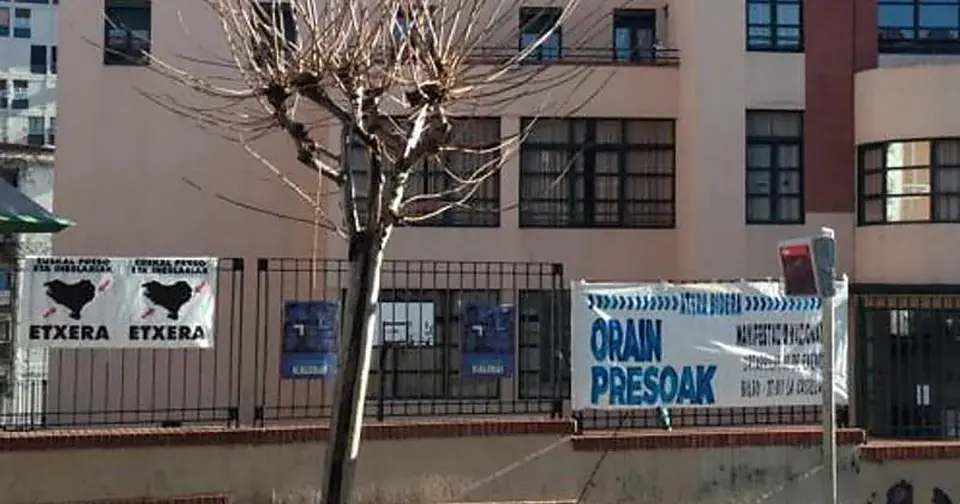
Three teachers, 137 pupils and a boycott campaign
Of the 5,000 schoolchildren who have visited the Memorial of Victims of Terrorism in Vitoria (MVT) since its opening in 2021, only 137 came from the Basque public education network. According to ABC's reporting, these visits were driven by the personal initiative of just three teachers, and one of them decided not to return after a "boycott campaign" was organised against him.
The information appears in Terrorism and Education. An Outstanding Challenge in Spain, a book published by the Centre for Political and Constitutional Studies (CEPC) and presented this Thursday at the Abando hotel in Bilbao. No officials from the Basque Government's Education Ministry, led by Begoña Pedrosa, attended the presentation. The Education Minister, Milagros Tolón, also did not attend the presentation event held in Madrid on 13 May.
15% of pupils justify ETA violence
Raúl López Romo, responsible for Education and Exhibitions at the MVT and principal author of the work, opens his analysis with a premise that defines the problem: "In Basque classrooms, grandchildren of those assassinated by ETA coexist with pupils who have never had a conversation at home about that terrorist organisation, or who hold understanding positions towards the 'armed struggle'".
Based on a survey carried out among more than 400 of the 5,000 pupils who have passed through the MVT, the study identifies two relevant attitudes. On one hand, a lack of knowledge of the region's recent violent history that López Romo describes as more "general" than concerning. On the other hand, a "justification" of ETA violence that he considers more "concerning" than general: 15% of those surveyed adopt that stance. The legitimisation of ETA persists, according to the report, in a "minority, but active" sector of secondary and sixth-form pupils in the Basque Country, with no parallel to any similar phenomenon.
Co-author Marta Rodríguez Fouz warns that the figures could be higher. A survey carried out in Navarre in 2021 put the proportion of pupils legitimising violence at 26%. "The breeding ground is the narrative that ETA was an anti-Franco reaction, that there was a good ETA and a bad ETA," says Rodríguez Fouz.
A subject absent from the curriculum
López Romo links the reluctance of Basque public schools to visit the MVT to the emergence of "radical nationalism" among part of the teaching staff, a reality he describes as "toxic" and which is associated, according to his analysis, with "the right-wing agenda". The structural problem, the book points out, is that the history of terrorism is not included in the academic curriculum: its treatment in the classroom depends on the individual initiative of each teacher.
The Basque Government created the educational tool Herenegun to address this "gap", which has the capacity to make the study of ETA a core subject but does not exercise it. According to data already published by ABC, only 14 of the 504 public and private schools in the Basque Country used it during the 2023-2024 academic year.
"Initiatives cannot depend on teachers who are sensitised to the issue," López Romo argues. The history of terrorism has also never been part of the university entrance examination, though a group of lecturers from the Public University of the Basque Country (UPV/EHU) are working discreetly to change that situation.
92% of pupils want ETA taught in schools
Against this backdrop, the study includes a figure that López Romo describes as "encouraging": 92% of those surveyed believe that ETA's history should have a place in the education system. The book, freely available online, thus points to a paradox: interest in knowing that history is greater among those receiving education than among those designing it.
Source: ABC