Santurtzi resident dies two days after being restrained with tasers by Local Police
A 29-year-old man died in hospital two days after being immobilised with taser guns by Santurtzi's Local Police. The case reopens the debate on the use of these weapons in Basque municipal forces.
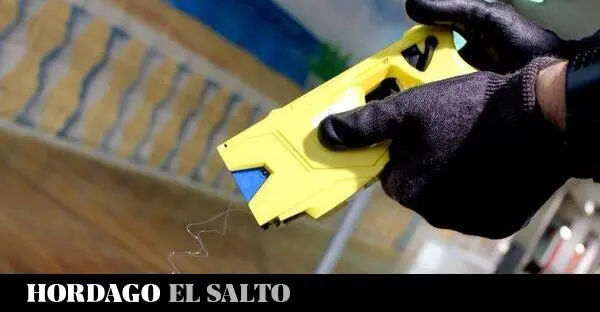
Death in Santurtzi following police taser intervention
A 29-year-old Santurtzi resident has died in hospital two days after being restrained by officers from the Local Police of the Bizkaia municipality. According to Google News ES — Crime, the intervention took place on Monday around four in the afternoon; the man was transported by ambulance to a hospital and died on Wednesday.
The Santurtzi municipal authority will refer the case to the Basque police oversight commission, the external body responsible for supervising operations that result in injured persons. However, the Security councillor, Imanol Urrutxua, has ruled out any connection between police action and the death: "We have checked everything and there is no indication that would lead us to believe there was any incorrect action by the officers," he stated.
The police trade union Esan expressed its "absolute support" for the officers involved and stated that, on the basis of recordings, the intervention respected the principles of "legality, necessity, congruence and proportionality". The EH Bildu coalition called for using "all administrative and legal tools" to clarify what happened and demand accountability if warranted. The collectives GKZ Ezkerraldea and Berri-Otxoak called a demonstration for this Saturday at 12:30 in front of the town hall, under the slogan of denouncing police violence.
Expansion of tasers in Basque Local Police
The death refocuses attention on weaponry that has been progressively normalised in municipal forces across the Basque Country. Santurtzi's Local Police equipped itself with taser guns in 2023, becoming the third municipality in the territory to have these devices, after Sestao—the pioneer—and Basauri. By 2024, there were already six municipalities in Bizkaia whose local police forces were using or training to use tasers; the expansion also reaches other forces, such as Donostia's Municipal Guard, which armed itself with these devices in 2025.
Manufacturer warnings and questioned protocols
This normalisation contrasts with warnings from the weapon's own manufacturer, which advises against its use on agitated persons, those with mental illness, heart problems or under the influence of drugs. Basque police protocols do not always incorporate these recommendations, according to documentation by the outlet that originally published the information.
The Ertzaintza protocol for taser use was based on a report drawn up by Andreu Soler i Associats, the same supplier that sells "less lethal" ammunition to the Security Department and which billed approximately 1.5 million euros between 2017 and 2020. That document, classified as confidential, held that the weapon "saves lives" and acts "equally" on an intoxicated, drugged or "mentally deranged" person—precisely the profile the manufacturer advises against. The entity that endorses the weapon is at the same time the one supplying it.
Fragmented contracts and union pressure
Security councillor Bingen Zupiria approved three fragmented contracts totalling 40,800 euros with Axon Enterprise—equipment, instructor training and practice ammunition—days after police unions demanded "more resources" from him. The pattern reproduces, according to published information, a dynamic in which forces and their suppliers set the agenda, while external oversight and transparency arrive, when they do arrive, after a death has occurred.
One more case on a long list
The incident adds to a series of police interventions with fatal outcomes. Across the Spanish state alone, at least 162 people died in police operations or under police custody between 2015 and 2022. In Euskal Herria, human rights organisations and families of victims have for years been denouncing impunity in these cases, a context that gains relevance again with the death of the Santurtzi resident.
Source: Google News ES — Crime (es)