Italy investigates series of bomb threats on flights with possible Russian link
The Italian Anti-Mafia Prosecution coordinates investigations into false bomb threats on European flights. Authorities are analysing a possible common pattern and connection with cyber attacks.
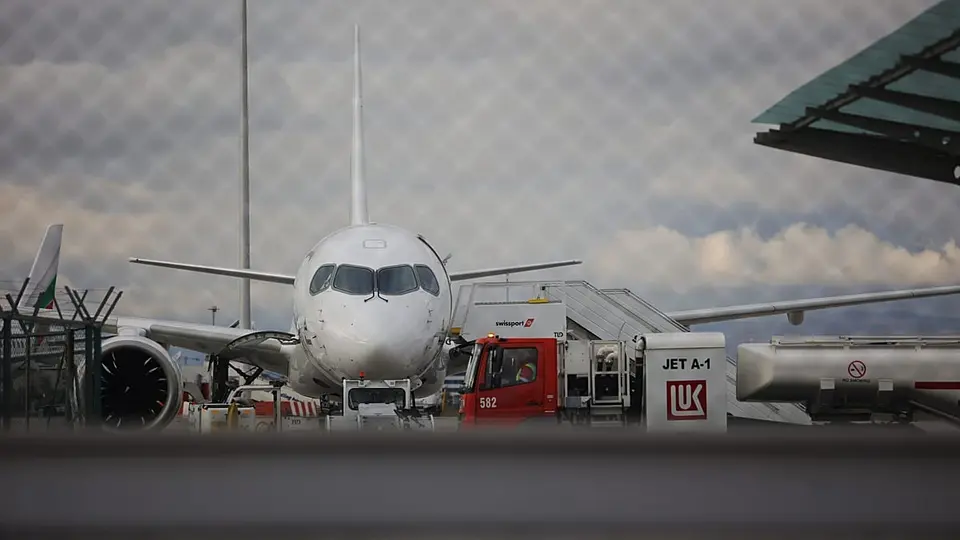
Italian Anti-Mafia office opens investigations after wave of bomb threats on European flights
The Italian National Anti-Mafia and Counter-Terrorism Prosecution is coordinating investigations into a series of bomb threats affecting various European flights, with repercussions at airports in Rome and Milan, as reported by pt.euronews.com. The National Cybersecurity Agency (ACN) sent reports on incidents recorded in recent days, whilst investigators from the Postal Police work to identify the senders of the messages and reconstruct the path of the communications.
The Prosecution of Busto Arsizio, in the province of Varese, has opened an initial investigation for false alarm, for now against unknown parties. The investigation focuses on two reports from Thursday, 5 November, relating to a flight from Thessaloniki and another from Porto, both of which landed at Milan Malpensa. The Rome Prosecution has also instituted an investigation for false alarm concerning aircraft departing from or arriving at Fiumicino, coordinated by prosecutor Francesco Lo Voi.
Checks carried out on board and on baggage detected no explosives. The case could converge into a broader investigation, given the similarities with threats received by other Italian and European airports.
Anonymous emails and reference to Russian ultranationalist movement
One of the central elements of the investigation is the possible common pattern of the threats. Authorities are seeking to identify the servers used to send the emails and the IP addresses associated with them, also using international cooperation. According to initial reconstructions, some communications would have passed through compromised addresses or email services that allow anonymity to be protected, such as Proton Mail.
One of the messages sent to Italian airports was signed by the self-styled "Fighters of the Male State". The acronym refers to the Russian ultranationalist and misogynist movement Muzhskoye Gosudarstvo, founded by Vladislav Pozdnyakov and banned in Russia. The message, written in Italian, contained threats against what it defined as the "feminist regime", accompanied by the phrase: "Today your sky will be red".
Investigators nevertheless note that the reference to the movement does not constitute proof of the identity of those responsible or of an effective link with Russian organisations. Among the hypotheses being analysed is also a connection with earlier emails that announced the presence of explosive devices on other flights and at approximately 280 Italian schools.
Meloni and Crosetto warn of hybrid threats to civil infrastructure
The situation is concerning the Italian executive, in particular because of the possible connection with cyber attacks against infrastructure and essential services. "Hackers and false bomb threats on aircraft clearly have to be a concern", said Prime Minister Giorgia Meloni at the sidelines of the equestrian festival Fieracavalli in Verona.
Meloni acknowledged that it is not yet possible to establish whether the attacks on blood refrigeration systems in France, the false bomb threats on aircraft and cyber attacks against supermarkets are linked to one another. "Today we are not able to say whether they are all linked, but they are certainly all telling us the same thing: there are civil infrastructures that are being attacked", she stated. The head of government further stressed the need to consider spending on defence and security in a broader perspective, citing the recent cyber attack on blood refrigeration systems for transfusions in France: "When you pay to buy that system, is it defence spending or is it health spending?"
The Defence Minister, Guido Crosetto, also considered the sequence of episodes concerning, although he emphasised that all bomb threats have so far proved unfounded. "It is an example of how easy it is, in any case, to trigger problems, to trigger anxiety and create psychosis in our countries", he said at the sidelines of the question-and-answer session in the Senate.
According to Crosetto, these are attacks that, in most cases, remain "below the attribution threshold": they can cause damage and disruptions without it being possible to definitively prove who organised them. The minister described the phenomenon as "a new threat" and mentioned that for at least three or four years he has been drawing attention to the need for preparation for this type of attack. He also clarified that the deployment of military fighter jets to escort the flagged aircraft is a standard procedure, activated whenever a possible threat is reported.
Crosetto ruled out the need to convene an extraordinary summit at Palazzo Chigi, the seat of government, explaining that combating hybrid threats is work already begun that must continue and be intensified. "There is someone who has an interest in fuelling tensions", he observed, reiterating that the mission of the institutions is to guarantee the country's security.
Tajani: Italy faces hybrid war since beginning of Ukraine invasion
The Foreign Minister, Antonio Tajani, also commented on the possible origin of the attacks. In an interview with Quotidiano Nazionale, Tajani recalled that Italy has been dealing with hybrid war since at least the beginning of the Russian invasion of Ukraine and that, together with European allies, it is adopting countermeasures. The head of diplomacy referred to the creation of a general directorate of security and a dedicated operations room.
Tajani recalled that pro-Russian hackers have already claimed recent cyber attacks against supermarkets, but he specified that regarding the latest bomb threats, there is still no evidence of responsibility attributable to Moscow. "We know well that Moscow will never declare military war on Europe. But we also know that it will try to destabilise, to create panic", said the minister.
Source: Google News PT — Crime (pt)