Former Head of Counter-Terrorism Unit on Cases That Haunt Him: Child Abduction and Bomb in the Fridge
Mariusz Pośnik, who led the counter-terrorism division for a decade, speaks about the most difficult cases from his 25-year police career. Unfortunately, memories from them continue to haunt him to this day.
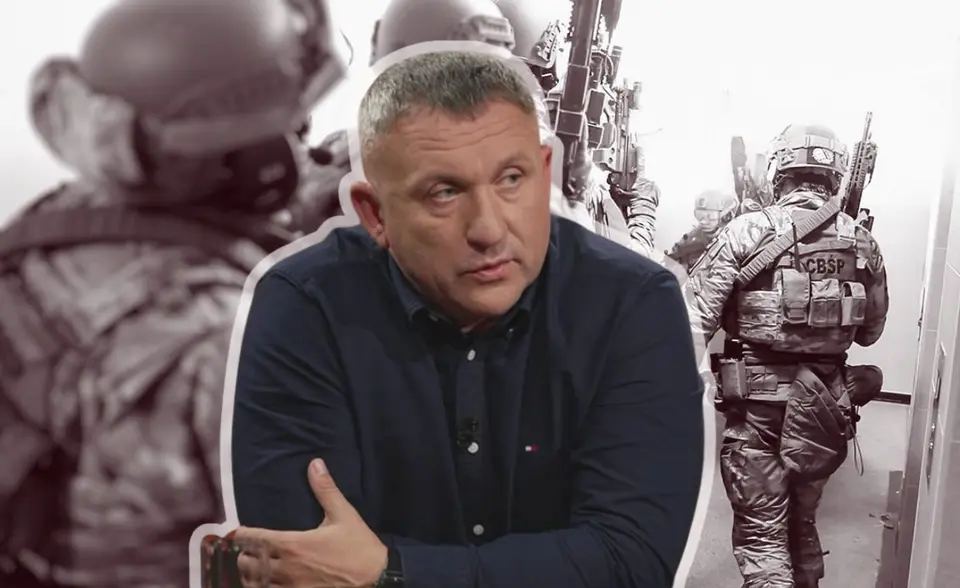
Coming to Terms with the Past
According to wiadomosci.wp.pl, Mariusz Pośnik spent 25 years in the police force. He began as an explosives expert at an airport, and from 2013 to 2023 headed the counter-terrorism unit at the Central Bureau for Investigation and Prevention (CBŚP) dealing with criminal offences and acts of terrorism. He has been retired for three years. As he himself says, this work does not leave a police officer even many years after he leaves the service — it remains in his head around the clock.
When asked about stories that haunt his nights, he does not hesitate. He recalls cases that shaped his approach to work and left lasting scars.
The Death of Young Dawidek
He was most affected by the case of a small boy. The father killed the child and abandoned his body by a water reservoir. For Pośnik, this case was particularly difficult — his own son was the same age as Dawidek.
The search lasted five days. Even the then deputy commander-in-chief Kamil Bracha became involved in the operation. "The general was finishing presenting medals in Legionów, he called and said: 'Come pick me up'. He put on tactical gear, took a stick and went into the bushes to search," Pośnik recalls.
He conveyed a clear message to officers from the preventive units. They were not simply searching for a child's body — they were there so the mother could say goodbye. The body was found on Saturday morning. "At the moment the mother arrived at the scene, I fled from there. I couldn't. I didn't want to hear that scream from hell," he admits.
This case never left him. To this day I remember all the details. Driving along that route, he sees the father stopping the car and putting the child's body on his shoulder. The memory also stayed with him at home — when he once carried a small child in his arms, he wondered how far he would carry him if... Such thoughts accompany an anti-terrorism worker.
Abduction and Explosive Device
The second case involves the abduction of approximately a 10-year-old boy from outside a school in Kraków. The journey there was sudden — in winter, with slippery roads and temperatures of minus 15 degrees Celsius.
At the scene stood the abductor's car with an explosive device that failed to detonate. For Pośnik, a dilemma arose: was it an error or a trap? One thing was certain — the car contained DNA material. Standard neutralisation could have destroyed the traces, so Pośnik decided on a "manual entry". He approached the car himself and disassembled the device.
When asked about his feelings at that moment, he recalled the words of an instructor from the airport: "He used to say: 'Don't be afraid, you won't even feel it.' You do it mechanically, automatically. Fear comes later — during the break, when you can't fall asleep or sleep at four in the morning."
The abductor played games with the police. He eavesdropped on the parents' flat, where investigators were working, and sent them messages. Among the officers, suspicion arose that there was a mole among them cooperating with the abductor. The boy returned to his parents after a ransom was paid. The perpetrator was arrested several months later — then it emerged he had carried out an earlier abduction. He had kidnapped a 76-year-old businessman and held him in a wooden crate buried in the ground. The man died because he did not receive insulin.
From the entire case, Pośnik remembered one thing — the cold.
Nitroglycerin in the Fridge
The third situation could have ended tragically. In Płock, police officers detained a man who had been boasting online about his purchases. In his fridge was a container with a substance the detainee called glycol. Two, three drops caused a micro-explosion and blew the head off a hammer.
When Pośnik opened the fridge, he found inside 17.5 litres of nitroglycerin — a material which, according to him, was equivalent to approximately 50 kilograms of TNT. A kick to the fridge or a sharp yank of the doors would have been enough for the entire building to blow apart.
It was necessary to evacuate approximately 900 residents. Commandant Bracha called every four minutes, but Pośnik asked him for a break — if things went wrong, then he should call. They worked from 4 p.m. one day until 11 p.m. the next day. Just coffee, cigarettes and carrying on.
The Price of Service
His family pays the price for such work. When a bomb exploded in Wrocław, his son was only two weeks old. His wife called: "Have you arrested him? They said on television that you have." Pośnik had to answer that he still had to wait.
There were many such call-outs. He would call home: "Pack me three toiletries and two pairs of trousers. You come in, take the bag and say: 'See you'. When will I be back? I don't know."
There is one thing he regrets to this day. His father was dying, and he still had to finish documents. I could have spent an extra two hours talking with him. I was not aware that soon he would no longer be there.
About all these cases, Pośnik says the same thing: you have to learn to live with it.
Source: Google News PL