Criminologist: Romania condemns drug consumers, not traffickers — 520 cases in 2025
Criminologist Vlad Zaha warns that Romania has the most criminal cases in the EU for drug possession for personal consumption, whilst major traffickers escape unchecked.
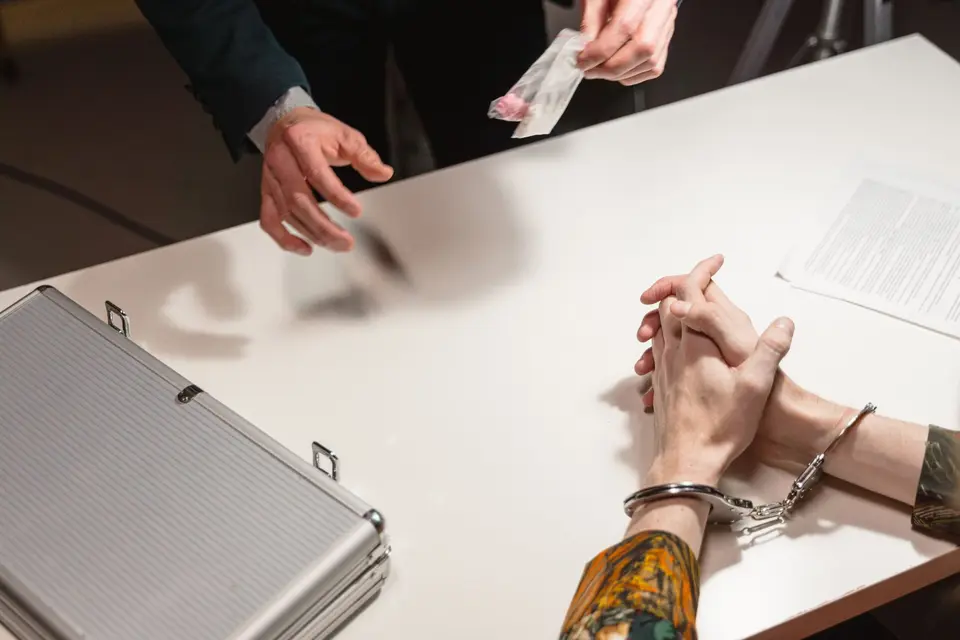
Romania leads EU in convictions for drug consumption whilst traffickers prosper
The number of people convicted in Romania for possession of drugs for personal consumption rose from 70 in 2016 to 520 in 2025, according to data presented by criminologist Vlad Zaha, cited by Cotidianul.ro. In the same period, convictions for drug trafficking remained almost unchanged — approximately 700 ten years ago compared to around 800 at present.
Zaha commented on the draft law regarding decriminalisation of drug possession for personal consumption, arguing that it would open the way towards prevention and treatment for consumers, whilst freeing up state resources for combating organised crime.
Consumers pursued more than traffickers
"Prosecutors pretend not to see the elite of organised criminality and turn drug possessors into the most hunted offenders across all of Europe," declared Vlad Zaha.
The specialist described a system in which law enforcement forces are concentrated almost exclusively against consumers. Approximately 18 people are taken daily to police stations without a warrant — 6,000 per year, three times more than ten years ago. The number of criminal cases on the desk of DIICOT prosecutors has reached 30,000, more than double compared to a decade ago, making Romania the EU country with the most such unresolved cases.
"Since the police, prosecutors and prisons cannot possibly catch these hundreds of thousands of drug consumers in Romania, they could stand at the corners of customs posts and ports to catch major drug traffickers, who are now enjoying extraordinarily the fact that all these resources are directed against consumers," argued Zaha.
Repression does not reduce consumption
The criminologist stressed that the current punitive model has not delivered results in reducing drug consumption. On the contrary, consumption has increased by approximately 80 per cent every seven years, and over the past 15 years it has risen by over 200 per cent, according to official data from the Romanian state.
"The harder this accelerator pedal of repression is pressed against people who do not need repression, the more all public health variables deteriorate: greater consumption, more emergency room admissions, more overdose deaths," said Zaha.
Overdose deaths are increasing, according to data presented by the specialist, by approximately half every few years. Consumers, instead of seeking help, choose to hide out of fear of penal repercussions.
"Penal sanctions do not prevent, do not reduce consumption, do not even keep it within the same limits and only make consumers hide, continuing consumption under cover," added Zaha.
Investment-repression ratio: 1 to 50
The ratio between spending on prevention, assessment and treatment compared to spending on repression is approximately 1 to 50, according to calculations cited by the criminologist. He assessed that the only beneficiaries of the current situation are organised traffickers, whose annual revenues are officially estimated in Romania at 250 million euros per year.
"No one stands to benefit except organised traffickers," the specialist clarified.
What the decriminalisation bill proposes
Vlad Zaha stressed that the draft law in question follows a model already implemented in several European states — Portugal, the Czech Republic, Croatia, Slovenia, Spain, Germany, Belgium and the Netherlands — where elite prosecutor units do not deal with possession for personal consumption.
"I find it remarkable that there are dozens of elite prosecutor structures from so many European countries — the Czech Republic, Croatia, Slovenia, Portugal, Spain, Germany, Belgium, the Netherlands — none of these structures deal with possession for personal consumption, because if they did, they would practically destroy the pace of detecting and punishing major traffickers," he explained.
Portugal is described by Zaha as the pioneer of decriminalisation in the EU. In countries that have adopted this model, seized substances remain confiscated, a contraventional fine may be applied, and persons in need of help are directed towards assessment. For minors, assessment is mandatory; for adults, counselling and treatment are optional, except in critical cases.
The bill under debate in Romania would follow the same principle: consumers struggling with dependency could request help without fear of penal prosecution, including in situations of medical emergency.
"Those who consume substances could ask, receive and benefit from prevention, support, harm reduction, treatment if they need it. And that means they would not be afraid to call an ambulance or even be taken to hospital, to save their lives," argued the criminologist.
Zaha added that the Republic of Moldova has already decriminalised possession of small quantities of substances for personal consumption, thus joining an increasingly broad European trend oriented towards public health in place of penal sanctions.
Source: Cotidianul.ro