Justice Minister Strömmer evaluates four years: gang violence, intimate partner violence and populism
Gunnar Strömmer looks back on four years as justice minister – from gang violence's "inferno" to the murder in Ånge and criticism of political oversimplification.
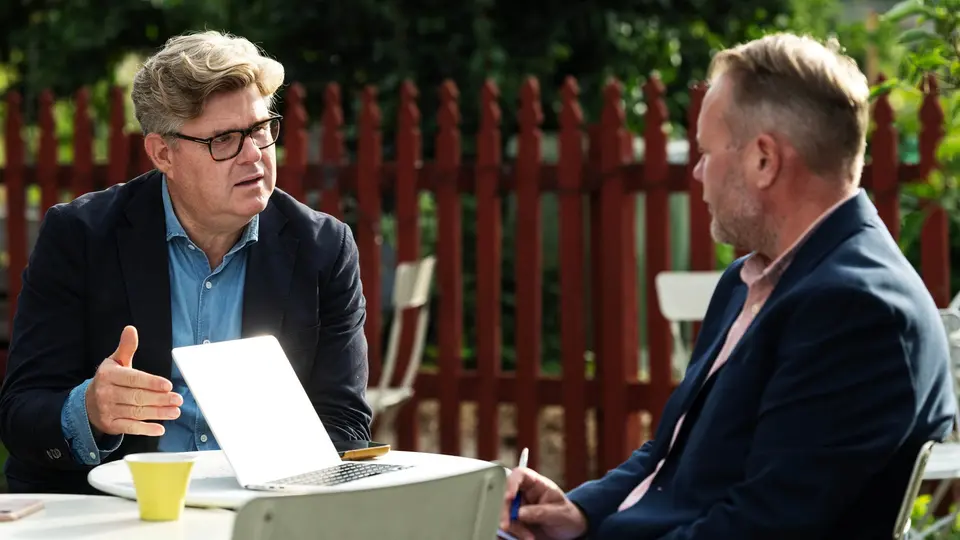
Strömmer on four years at the helm of justice: successes, shortcomings and a warning
Gunnar Strömmer took office as justice minister amid an "inferno". According to Expressen, columnist Fredrik Sjöshult met him in Enskede, the day before an autumn and an election, to sum up the four years that had passed.
At Enskede bakery, in a small green garden that smells of fresh baking, Strömmer begins with the latest shooting statistics from the police: only four shootings in August, with one injured and none dead.
– It is easy to forget what an inferno it was, says Strömmer.
He reminds of August 2022 when 30 shootings claimed five lives and injured 14 – and of September the following year, when eleven people were murdered in a single month.
Preventive wiretapping as key tool
The tool Strömmer highlights as most decisive is preventive wiretapping. The police can now monitor gang criminals who are planning serious crimes – without having to specify in advance exactly what crime is involved.
– The effect of this has been that one has been able to stay one step ahead and has apprehended criminals at an earlier stage for instigation, preparation or attempted serious crimes, he says.
He also emphasises the arrests of Swedish gang leaders abroad. During the meeting with Sjöshult, his mobile flashes: two network criminals have been sent home from Morocco to Sweden.
– Every time there is a ping on my mobile about a gang criminal who has been arrested abroad, it is possible to draw a straight line between the person and recruitment of children somewhere in Sweden or a contract killing, says Strömmer.
He sums up the situation as "proud but not satisfied" and announces that the work of hunting gang leaders is to be stepped up, with particular focus on establishing contacts in Lebanon and Syria.
The murder in Ånge – a case that has stuck
Strömmer admits that the focus on gang violence has meant that men's violence against women has not received the space it requires. One incident has made a particularly strong impression on him: the murder of a woman in Ånge last winter.
– It was a terrible case, Strömmer states.
The woman was killed by a man who had previously been convicted on repeated occasions for serious violation of women's integrity. Her surroundings knew that she was in mortal danger, but she herself did not wish to receive help. The authorities attempted to intervene, but the law did not give them the necessary powers.
– When one knows that this violence is imminent from a high-risk individual, society must be able to intervene, the justice minister argues.
He sees possibilities in expanded preventive wiretapping also for that type of high-risk individual and emphasises that the tool should not be reserved for gang crime. The possibility of custodial sentences for the worst repeat offenders and changed rules regarding sentence reduction should, he hopes, also have an effect.
Sentence reduction – and the temptation of populism
On the subject of sentence reduction, Sjöshult chooses to challenge Strömmer. In political debate there is talk of a "abolished sentence reduction" – but Strömmer knows that reality is more nuanced. A person convicted of a hundred serious crimes does not receive a hundred times the maximum sentence. Each crime in a long series will not be punished to its full extent, but in future each crime should carry greater weight in sentencing.
– We are abolishing today's sentence reduction, Strömmer clarifies.
Sjöshult plays a clip for him: an influencer praises Strömmer for the "abolished sentence reduction" and uses Nytorgsman as an example, but incorrectly states that he was convicted of aggravated rape and sentenced to five years. Strömmer had liked the post with a star – but says now that he does not wish to correct the influencer.
– It is clear that in political debate questions can sometimes be simplified and it is difficult to capture complexity, Strömmer hums.
Conduct requirements that do not bite
The week before the meeting, Sjöshult had received worrying reports from the police: the government's new conduct requirements – which are supposed to make it possible to revoke permanent residence permits – are reportedly not having the desired effect. The police have made fruitless attempts to get rid of individuals with lengthy criminal records and repeated detentions. The Migration Agency is reportedly not living up to the police's efforts to use the new tools.
Strömmer responds that he presumes that "the departments of law will work closely together".
– We shall monitor this carefully. Should it prove that there are fundamental problems here with the authorities or the rules, we shall sort it out, he adds.
Residence bans and safety in public spaces
One purpose of the conduct requirement is to increase safety on streets and squares. In that context, Strömmer highlights preventive residence bans as a tool that has already shown results. The police have, with their help, managed to clear open drug scenes and unsafe town centre environments of gang criminals – including youth robbers in Nordstan in Gothenburg and gangs in the Stockholm suburbs of Fittja and Rågsved.
In Rågsved, Sjöshult noted two years ago that the culture of silence was still marked: a shop owner did not dare openly show that he was speaking with the media. How the situation there looks today is not fully apparent from the article – but the question of culture of silence and trust in the authorities runs as an undercurrent throughout the entire conversation.
Expressen reports that Strömmer, despite successes with shooting statistics, leaves the conversation with an image of a justice minister who is aware that several of the most important tools remain untested at full scale – and that political communication about them sometimes runs further than the facts allow.
Source: Expressen