Banned drugs worth €37 million: 34 arrested in international police operation
Slovenian police and foreign security authorities arrested 34 suspects and seized drugs valued at €37 million in a final operation of a four-year investigation.
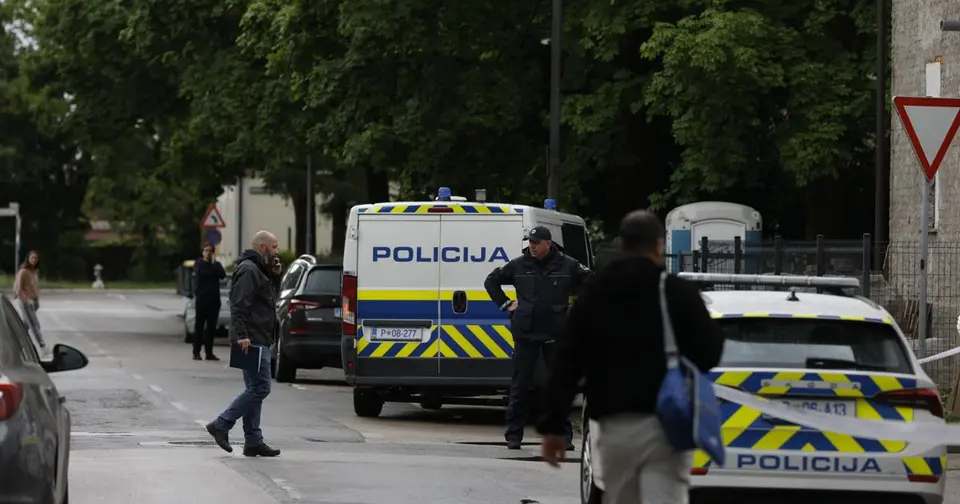
Six criminal groups dismantled following four years of investigation
Slovenian police, together with foreign security authorities, conducted an extensive final operation of a multi-year criminal investigation on Tuesday, 6 October. According to Žurnal24, approximately 400 detectives and police officers participated in the operation, carrying out more than 41 house searches and arresting or detaining 34 suspects.
Seventeen of these individuals had their freedom curtailed, whilst 15 remained in custody until brought before an investigating judge. One of the main suspects was arrested in Croatia on the basis of a European arrest warrant before the operation and is currently in extradition custody. One of the investigations also took place in Spain.
Drugs, weapons and encrypted cards
According to police estimates, the value of the total seized prohibited drugs on the market would exceed €37 million. Solely during the house searches, officers seized more than 15 kilogrammes of amphetamines and more than 40 kilogrammes of cannabis. Stojan Belšak, head of the Organised Crime Department at the Criminal Police Sector of the Ljubljana Police Directorate, stated that according to an artificial intelligence assessment the value would amount to as much as €64 million, but police maintain their estimate of €37 million.
In addition to drugs, police officers seized several pieces of weapons, including an automatic rifle and six pistols, as well as more than 500 cards for encrypted telephone communication. In the initial phases of the investigation, members of the groups used the SkyECC application for mutual communication. More than 700,000 tablets for treating erectile dysfunction, valued at approximately €1.5 million, were also seized.
Primary Slovenian suspect with a lengthy criminal history
According to unofficial but reliable information from Žurnal24, the primary suspect amongst Slovenian citizens is Mustaf Izairi, who has been mentioned multiple times in the media in connection with drug trafficking. According to reports in Gorenjski glas, he was convicted in 2019 to two and a half years in prison for cocaine delivery, which a father and son from Radovljica subsequently resold to Austria. His criminal history extends further back — in 2012 he was finally convicted as the head of a group for cocaine and heroin trafficking to six years in prison. At that time, he was the owner of two restaurants in Ljubljana.
Kidnappings, shootings and attempted murders
The investigation did not cover only drug trafficking. The criminal groups were also involved in kidnappings, extortion, shootings and attempted murders. Two kidnappings occurred in the territory of Slovenia, which were directly connected to major drug losses in police seizures — members of the groups attempted to determine who had stolen the drugs or who was a police informant.
Police are also investigating several shootings in the area of Ljubljana and wider, in which there are indications of the involvement of members of the investigated groups. "The nature of this criminal group is very uncompromising. They are capable of any criminal acts and also of mutual revenge," said Belšak.
The criminal complaint encompasses more than 60 criminal acts in total, related to prohibited drugs, as well as criminal acts related to weapons and prohibited medicines.
Cocaine from South America via Spain and Belgium
Mišo Radovančević, head of the Department for Prohibited Drugs in the Criminal Police Directorate at the General Police Directorate, explained that the four-year investigations encompassed criminal groups whose members operated in Slovenia, Croatia, Bosnia and Herzegovina, Spain and the Netherlands.
Some groups had direct links to South America, from where they organised transports of larger quantities of cocaine. The drugs were then transported towards Slovenia via Spain, Belgium and the Netherlands, often concealed in legal shipments. "Trade in prohibited drugs is not a matter for just one country or one police force. It is a global organised criminal activity where criminal groups do not recognise state borders," emphasised Radovančević.
The investigation, which initially proceeded as a single case, was eventually divided into six separate criminal groups, against which separate criminal complaints were filed. The investigation was conducted in Slovenia by criminal detectives from the Criminal Police Sector of the Ljubljana Police Directorate in cooperation with the Criminal Police Directorate of the General Police Directorate, and was directed by the Specialised State Prosecutor's Office of the Republic of Slovenia.
Slovenia as a junction between the EU and the Western Balkans
In the investigation, Slovenian police collaborated with 22 police forces from the European Union and the Western Balkans, with Europol playing a key role. Cooperation also took place within the framework of Eurojust and a joint investigation team.
Radovančević emphasised that Slovenia, due to its geographical position, is an important connecting point between the European Union and the Western Balkans. "Our small size is not our limitation. In the fight against organised crime, we are connected, responsive and capable of working together with our partners anywhere and at any time, both at home and abroad," he said.
Police announced that they will continue to treat the field of prohibited drugs and organised crime as a priority in the future and will continue close international cooperation. "If criminals coordinate their activities across borders, information, data, and police cooperation and coordination follow them across borders too," concluded Radovančević.
Source: Žurnal24