Supreme Court rejects Bradáčová's appeal in case of army BVP engines
The Supreme Court has rejected an appeal by the top state prosecutor Lenka Bradáčová in the case of the sale of decommissioned army engines. Officials could have caused the state damage amounting to hundreds of millions of crowns, but courts cleared them.
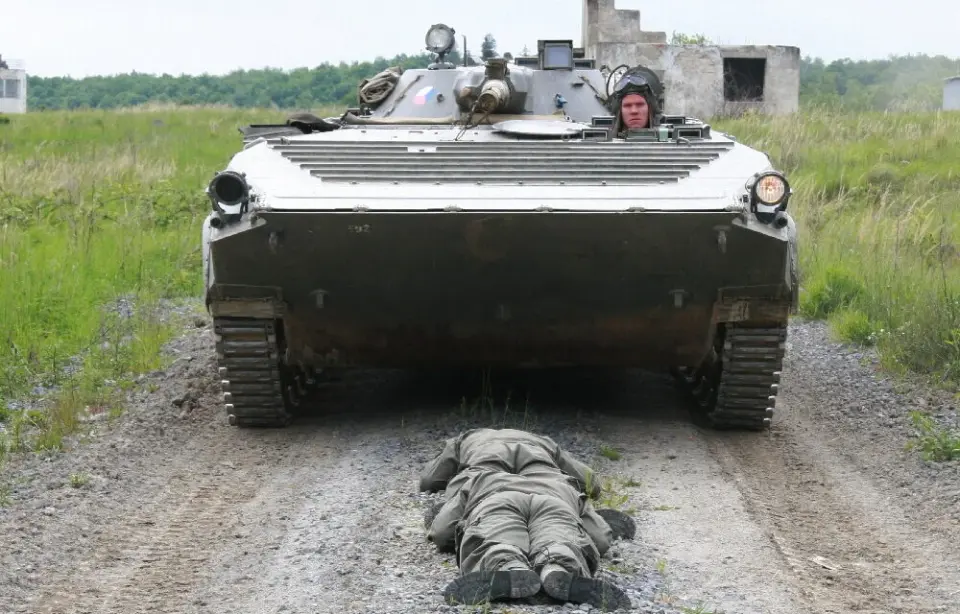
Supreme Court confirms conclusions of lower courts in case of engines for combat vehicles
On 29 July 2026, the Supreme Court rejected an appeal by the top state prosecutor Lenka Bradáčová as manifestly unfounded in the case of transfers of decommissioned army engines and spare parts. As reported by ekonomickydenik.cz, which studied the full reasoning of the judgment, the court agreed with the conclusions of the lower courts and did not accept the arguments put forward by the state prosecution.
The case concerned the handling of unnecessary assets of the Defence Ministry, in particular UTD-20 engines for infantry combat vehicles (BVP) and other spare parts for military equipment. The prosecution accused officials Josef Lachman and Roman Pavlík of breaching their duties when preparing the transfer of assets to VOP CZ. The case was also joined by Adolf Veřmiřovský, who was the director of VOP CZ at the time. The state prosecution estimated that the officials could have caused the state damage amounting to hundreds of millions of crowns.
Dispute over UTD-20 engine prices
One of the central points of the dispute remained the market value of UTD-20 engines. Experts determined their so-called time value at 286,400 crowns in 2010 and 290,300 crowns in 2013. However, they also concluded that the customary price could not be reliably determined for these engines, as they were not commonly traded on the Czech market.
The state prosecution rejected this conclusion as insufficient and pointed to a public tender in which the Defence Ministry sold all 111 engines in autumn 2013. Interested parties then paid 263,003 to 271,600 crowns per unit, with the Defence Ministry setting a minimum price of 250,000 crowns per engine. According to the state prosecution, this was important evidence of the true value of the engines — not theoretical expert valuations, but amounts that specific buyers were willing to pay.
However, the Supreme Court rejected this argument as temporally inconsistent. The public tender took place after the officials made the decision for which the prosecution accused them. According to the court, later selling prices could therefore not be mechanically transferred to the moment of the original decision-making.
Tender influenced by arms manufacturers' competitive struggle
The court also took into account the circumstances of the tender itself. According to the lower courts, the results were influenced by competition between companies that had their own commercial interests in the engines and spare parts. The courts heard witnesses connected with the companies Excalibur Army (from the CSG group) and STV Group — a dispute between these arms manufacturers was what started the whole case.
Moreover, the officials could not have known at the time of their decision either the course of the later tender or its results. According to the Supreme Court, this fundamentally weakened the possibility of using the achieved prices as direct evidence of the value of the assets at the moment of the original decision.
The court also recalled that expert evidence did not provide a reliable basis for determining the customary price. Special military equipment does not have a common market in the Czech Republic, and experts did not have sufficient objective comparative data at their disposal. The technical condition of the engines, the manner of their storage, maintenance and warranties all entered into the final price.
Appeal repeated arguments of lower courts
The Supreme Court's main criticism was directed at the manner in which Bradáčová presented the appeal. According to the court, to a large extent it repeated objections that lower courts had already dealt with — it again disputed their assessment of expert reports, witness testimony, documents, emails and other evidence.
Instead of a legal question, according to the Supreme Court, she presented primarily her own version of the facts. This is of crucial significance in appeal proceedings: the Supreme Court is not another appellate instance that would again hear witnesses or compare expert conclusions. Evidence belongs before the court of first instance; any errors can be corrected by the appellate court. An appeal, however, cannot serve as another round of evidence-taking simply because the state prosecution assesses the same evidence differently.
Bradáčová further argued in her appeal that the lower courts had overlooked or misinterpreted some material evidence. The Supreme Court did not accept this conclusion either. According to it, the courts assessed the evidence both individually and in their mutual connections, did not ignore arguments supporting the version of the prosecution and explained why they did not agree with some of the state prosecution's claims.
Expert report by Stodola and bias again rejected
In her appeal, Bradáčová again raised the question of expert report by Jiří Stodola and his alleged bias. The state prosecution also challenged the technical condition of the engines and data from the Defence Ministry's logistics information system. The Supreme Court did not find these objections suitable for review either, as they were again primarily a dispute with the factual conclusions of the lower courts, rather than legal questions.
The entire case thus concludes a series of court proceedings concerning the handling of decommissioned military assets. The Supreme Court's conclusion means that the accused officials remain acquitted and the state prosecution no longer has any further remedies at its disposal.
Source: Google News CZ — Crime (cs)