War criminal Heinrich Jöckel executed in Litoměřice 80 years ago
Heinrich Jöckel, commandant of the Terezín Small Fortress, nicknamed "Pinďa", was executed on 25 October 1946. He became known for his sadism and callousness, and never regretted his crimes.
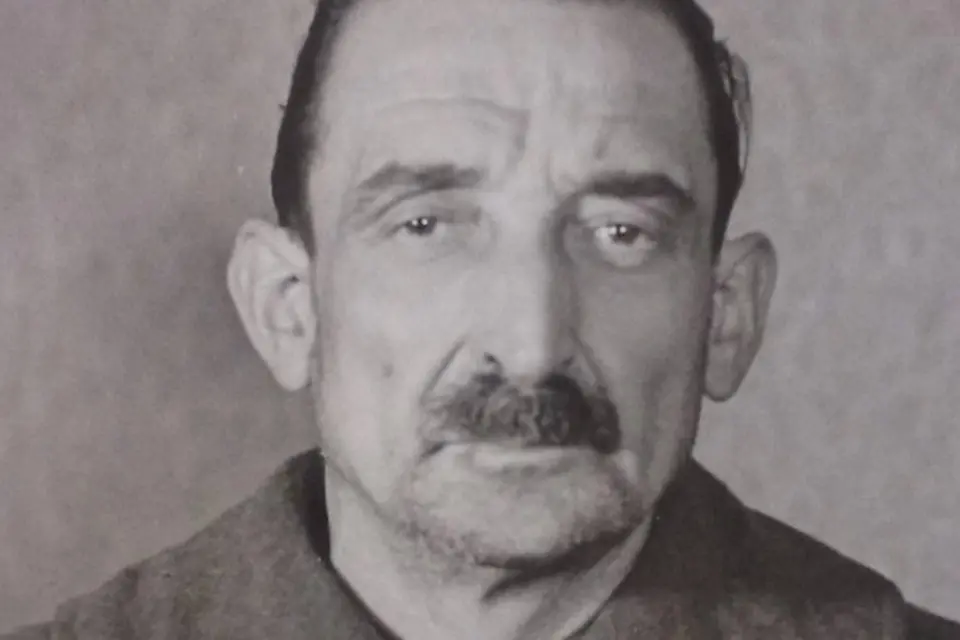
Commandant of the Small Fortress "Pinďa": executed for sadism and murders of prisoners
Eighty years ago, on 25 October 1946, a death sentence was carried out in Litoměřice against Heinrich Jöckel, a war criminal and former commandant of the Terezín Small Fortress. As Deník.cz reported, prisoners nicknamed him Pinďa — and this nickname became synonymous with ruthless cruelty.
On the very day of the execution, survivor Jewish prisoners of the Small Fortress stood before the Litoměřice court, who testified to the extent of Jöckel's sadism. Among other things, they confirmed that the commandant had issued an order: for every rabbit that would disappear from the camp hutches, ten Jews would be shot.
The Jewish Telegraph Agency reported on 25 October 1946 how a correspondent of the agency directly asked Jöckel about the fate of thousands of Jews who disappeared from Terezín and were never found. "His answer was evasive. The correspondent stated that it did not appear that he regretted the murders of thousands of Jews committed on his orders," the period record of the agency states.
From painter to SS member
Heinrich Jöckel was born on 10 July 1899 in Offenbach am Main. He trained as a sign painter and motor painter, completed military active service and participated in combat during the First World War. After Germany's capitulation in November 1918, he was discharged from the army and worked as a general labourer. In the mid-1920s, he opened his own painting business, but the global economic crisis forced him to close the enterprise.
It was precisely this experience that led him to join Hitler's NSDAP at the end of 1931. Shortly afterwards, he joined the uniformed order police — the Ordnungspolizei — in his native Offenbach.
As an ordinary policeman without education and professional qualifications, he had little prospect of career advancement. The turning point came on 30 January 1933, the day Adolf Hitler became Reich Chancellor: Jöckel applied to join the SS units. As a fanatically devoted Nazi, he was accepted despite evident qualification deficits.
Career in conquered territories
Within Germany, career advancement was blocked by a firmly structured bureaucratic apparatus full of ambitious educated Nazis. Jöckel's moment came only in 1938, when Hitler began annexing new territories — first Austria, then the Czechoslovak borderlands following the Munich Agreement.
Original officials had to step aside and Nazi administration sought reliable, albeit "second-rate" party members. Jöckel was transferred to Innsbruck after the Anschluss of Austria, then to Opava after the cession of the borderland, which became part of the Reich's territorial gain.
According to the website Political trials after Hitler's occupation of the remainder of Czech lands in March 1939, Jöckel attended a special police course in Berlin. After the outbreak of the Second World War, he returned to Opava as head of an internment camp in Skrochovice. After its closure in December 1939, he transferred to the Prague Gestapo, where he investigated illegal leaflets and maintained a filing system of those arrested.
Commandant of the Terezín prison
From 10 June 1940, Jöckel built, on the orders of the Prague Gestapo, a prison in the Terezín Small Fortress, which he then led until the end of the occupation. He lived directly in Terezín — in a spacious flat in a manor house — with his second wife Elsa and daughters Johanna and Elfrieda. Photographs capture him with instructors, in riding breeches and with a Hitlerian moustache, according to German websites on the Terezín Ghetto.
During this period, Jöckel became known for his sadism and complete disregard for human life. The German website Terezín Ghetto states that he "was demonstrably involved in the mistreatment and brutal killing of several prisoners". He ordered reductions in food rations, denied Jewish prisoners medical care and assigned them to the most strenuous work groups.
Mass graves at the close of war
His sadism did not diminish even at the close of the war, when he must have been aware of the reckoning awaiting his actions. According to the recollections of witness Antonie Šandová, captured by the Memory of the Nation project, from 1 March to 7 May 1945 he had hundreds of executed and dead prisoners from death marches and evacuation transports passing through Bohemia buried in mass graves.
However, the worst crime came on 2 May 1945 — already after Hitler's suicide in the besieged Berlin bunker. At that time, Protectorate State Minister Karl Hermann Frank implemented the so-called scorched-earth plan: destruction of evidence of war crimes and mass liquidation of imprisoned persons designated as dangerous.
The Prague Gestapo selected 70 potentially dangerous prisoners on Frank's personal orders, who risked involvement in the expected uprising, according to the website War graves and places of remembrance. These prisoners were marked with the code XYZ, meaning an order for immediate liquidation without trial — the so-called Sonderbehandlung, special treatment.
Because they were held in the Small Fortress, officials from the Prague Gestapo arrived there on 2 May 1945 with orders to carry out the shootings. Jöckel immediately complied with the order — despite an order from the head of the Berlin Main Reich Security Office Ernst Kaltenbrunner from mid-April 1945 that forbade executions of prisoners who had not yet been tried. The result was 52 murdered prisoners in the final hours of German occupation.
Sentence and execution without remorse
After the war ended, Jöckel was detained and brought to trial in Litoměřice. A death sentence was passed and carried out on 25 October 1946. Jöckel never regretted his deeds — neither before the court nor in conversations with journalists. Survivor prisoners testified that he did not behave like a man who was aware of the weight of his actions.
Source: Deník.cz