Two years without Nataliia Solomykina: ground-penetrating radar and demolished walls, but no body
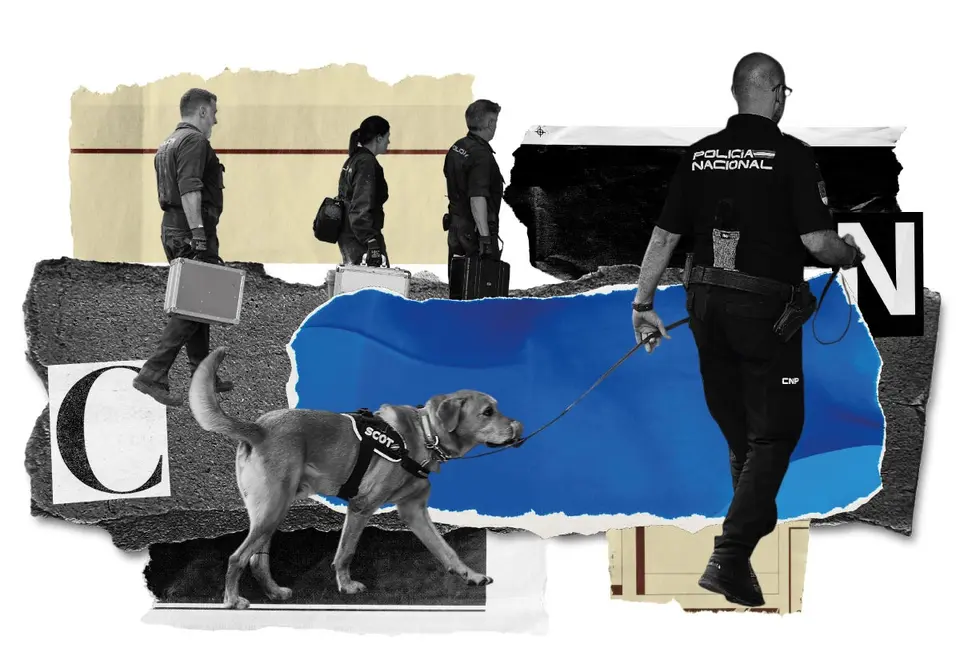
The National Police search with ground-penetrating radar for the body of the Ukrainian woman who disappeared in Valencia in April 2024. Her husband, Vitalii S., is the only suspect.
Two years of searching with no trace of the body
Two years after the disappearance of Nataliia Solomykina, the Ukrainian resident in Valencia whose whereabouts were last known on 25 April 2024, the National Police continue to have not located her body. According to Ideal, the case has only one person under investigation—the victim's husband, Vitalii S.—and an accumulation of evidence pointing to a violent death with concealment of the body, although no procedures carried out so far have yielded human remains.
The digital trail leading to a waste treatment plant
One of the main lines of investigation places the possible location of the body at the Los Hornillos waste treatment plant in Quart de Poblet. Investigators followed the digital trail of Nataliia's mobile phone: at 23:45 on 25 April, the device connected to various antennae from Conchita Piquer Street—where police searched a ground-floor premises belonging to the suspect—and traced a route through several Valencia streets to the exit via the A-3 motorway heading towards Madrid. The last signal was recorded at 01:39 on 26 April in an industrial estate in Ribarroja, close to the aforementioned plant.
That geolocation matches the overnight route of a rubbish collection truck operated by Fomento de Construcciones y Contratas (FCC), the company responsible for waste treatment in Valencia. The vehicle driver confirmed to police that he passed Conchita Piquer Street at approximately 23:30 that night and that, although he monitors the discharge through a screen, the abrupt fall of waste could have unintentionally covered a body. After finishing the route, the truck discharged at Los Hornillos, but no workers found human remains during the sorting processes.
Officers do not rule out the possibility that the phone was simply thrown into a bin whilst the body was concealed elsewhere.
Ground-penetrating radar and demolished walls with no results
To examine the subsoil of the plant, a specialist unit of the National Police travelled from Madrid and used ground-penetrating radar, technology capable of detecting ground alterations that could indicate the presence of human remains. The search yielded no positive results.
In parallel, the Homicide Unit inspected the premises on Conchita Piquer Street. Supported by the Tactical Intervention Operations Group (GOIT), specialised in opening compartments liable to contain remains or items of police interest, officers drilled and knocked down walls, lifted the flooring and broke the false ceiling of a room. They also inserted a micro-camera through various openings and used construction machinery. The reason was a considerable increase in electrical consumption at the premises on the day of disappearance, a fact confirmed by Iberdrola. This search too yielded no bones, clothing or criminal evidence.
The chain of evidence against Vitalii S.
The case file contains several elements which the Homicide Unit considers incriminating. On the day Nataliia's trail went cold, both of Vitalii S.'s mobile phones—one with a Ukrainian number—remained switched off during two time periods: from 11:08 to 18:02 on 25 April, and from 09:42 to 16:52 on 26 April, precisely the periods of greatest interest to the investigation.
To this "digital blackout" of approximately seven hours is added the fact that the suspect took 48 hours to report his wife's disappearance: the report was not filed until 27 April. This delay contrasts with his own statements, in which he ruled out the possibility that Nataliia could be with third parties because, according to him, she had no close friendships in Spain. On 26 and 27 April he also made no attempt to call her, and between 25 and 30 April he only dialled her number on five occasions.
Investigators also point to suspicious wounds discovered on the suspect's hands days after the disappearance, as well as his prior purchase of a professional meat grinder. To this is added his sudden interest in cleaning the boot of his Toyota RAV4, normally dirty, coinciding with the date when Nataliia ceased to give any sign of life.
The defence questions the focus of the investigation
The accumulation of evidence has not yet been sufficient to locate the body or to bring definitive charges. The defence of Vitalii S. has complained that the investigation focuses exclusively on him without considering other hypotheses, according to Ideal. The case remains open two years later, with the National Police searching for answers in the subsoil and amongst the rubble of a premises that, so far, has revealed no secrets.
Source: Ideal