Main suspect in Helena Jubany killing will challenge DNA chain of custody on jersey to seek acquittal
Santiago Laiglesia will seek his acquittal. Although he has not yet formalised his defence submission, the main suspect in the Helena Jubany killing maintains his innocence and, according to ABC's findings, will present a criminologist's report to dismantle the key evidence against him: the DNA loca
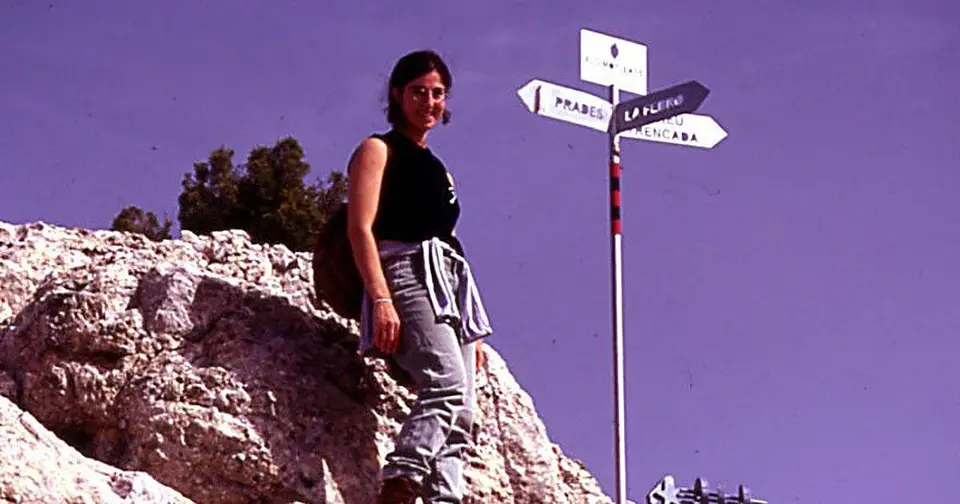
Laiglesia's defence attacks DNA as central evidence in Helena Jubany killing
Santiago Laiglesia will request his acquittal at the trial for the murder of Helena Jubany, which took place on 2 December 2001 in Sabadell. According to ABC's findings, the defence will present a criminologist's report aimed at discrediting the genetic evidence supporting the prosecution: the DNA found on the victim's jersey, whose match with Laiglesia's profile was certified by the National Police with a probability of "26 billion times more probable" than that of "any other person".
The defence strategy will focus on challenging the chain of custody of that sample and possible contamination of the genetic material, given that the garment was preserved for nearly a quarter of a century. At the time of the original investigation, forensic experts found only the young woman's own DNA on the jersey. The Scientific Police did not certify the presence of remains attributable to Laiglesia until years later, when he had already been identified as a suspect from the outset of the inquiry.
That belated finding was precisely the argument that led the investigating judge to order Laiglesia's provisional detention in November last year, considering that it constituted evidence of criminality that "incriminates in a tangible way" the suspect and opened a "new scenario" compared to the previous situation, in which there was insufficient evidence to maintain his indictment.
The Barcelona Provincial Court released him in January, finding that, more than two decades after the crime having elapsed without him fleeing, and given his ties to the community, preventive detention was not justified. The Third Section replaced the precautionary measure with the withdrawal of his passport and monthly court appearances.
With the investigation concluded, Laiglesia is one step away from taking the stand. The Public Prosecutor and the private prosecution exercised by Helena's family are calling for 26 years in prison for him: 20 for murder with premeditation and 6 for unlawful detention. The defence will seek acquittal.
Other evidence and the common background of victim and suspects
Beyond the DNA, the prosecution maintains other evidence against Laiglesia. At the time of the crime, he was living with his then partner, Montserrat Careta, in the building on Calvet d'Estrella street in Sabadell from which Helena was thrown into the void. The young woman's body was found in that same location.
Careta was one of the first investigated, but took her own life after being admitted to Wad-Ras prison, leaving a note in which she reiterated her innocence. Her death extinguished the criminal liability that might have applied to her.
Both Helena Jubany and Laiglesia and Careta were part of the Natura section of the Sabadell Excursionist Union (UES). Xavier Jiménez, another of the suspects, also belonged to that circle; he is attributed with drafting part of the anonymous letters sent to Helena in the weeks before the crime. Those letters were accompanied by drinks laced with sedatives, the same ones that the autopsy detected in the young woman's body. Despite this, both the Public Prosecutor and the private prosecution have requested dismissal of the case against Jiménez, considering that there is insufficient evidence of his direct involvement in the death.
Source: ABC