Drug trafficking in Galicia: from historic smuggling to armed violence against the Civil Guard
The death of a suspect during a raid in Cambados reignites debate over the violent escalation of drug trafficking in Galicia and its transnational structures.
The death in Cambados highlights the new face of Galician drug trafficking
A man under investigation for drug trafficking died this Tuesday during a police raid in Cambados, as part of an anti-drug operation deployed across several municipalities in O Salnés. The incident is being investigated and has reopened the debate about the risks faced by officers in such interventions, according to diariodepontevedra.es.
The incident once again brings into sharp focus a concern that security forces have grappled with for years: the transformation of drug trafficking towards more professionalised structures, with greater economic capacity, international connections and an increasingly willingness to use violence.
From historic networks to transnational organisations
Galicia remains one of the main entry points for cocaine and hashish into Europe, but the phenomenon has changed radically compared to the historic contraband networks. Current organisations operate with transnational structures, use encrypted communication systems and employ modified recreational vessels, false compartments in vehicles, contaminated containers in commercial ports and even narco-submarines capable of crossing the Atlantic with tonnes of drugs on board.
This is compounded by the emergence of groups from Latin America, the Balkans and North Africa, which have introduced more aggressive methods and a greater culture of weapon use in the Galician criminal environment.
Barbate and Huelva: two episodes that marked a turning point
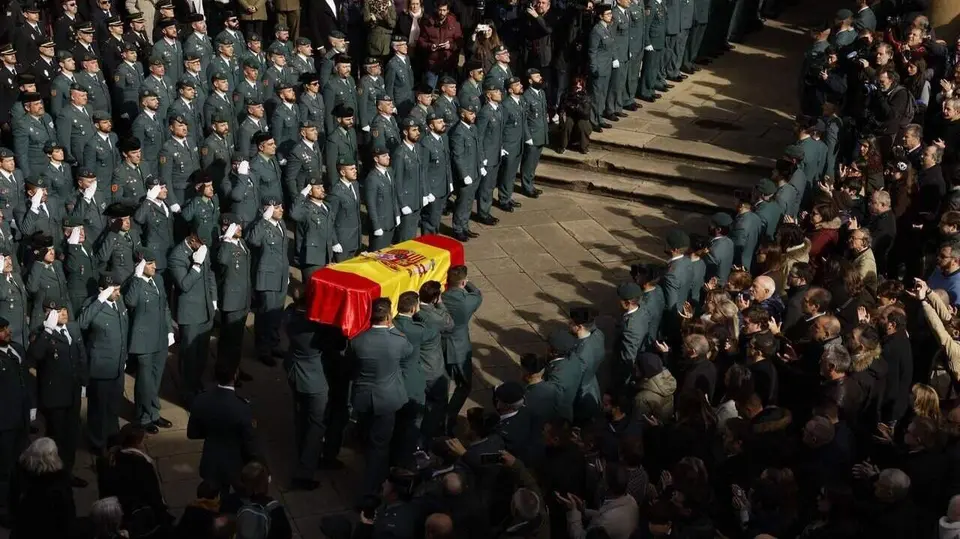
Investigators warn that violence no longer constitutes an exception. The episode that marked a turning point in Spain occurred in February 2024 in Barbate, when a drug-smuggling boat deliberately rammed a Civil Guard vessel, causing the death of two officers and injuring two others. Images of the attack generated national shock and showed the extent to which certain criminal organisations are willing to physically confront law enforcement.
Barely two years later, the story was repeated tragically on the coasts of Huelva. On 8 May 2026, two officers from the armed institute died in the line of duty after their Civil Guard Maritime Service vessels collided during the pursuit of drug traffickers in waters between Punta Umbría and Mazagón.
Armed incidents cascade during recent operations
Police reports confirm that these networks increasingly resort to violence to protect their merchandise. Just over a month ago, a Civil Guard officer was wounded by gunfire in Campos del Río, in Murcia, after being shot at by a person guarding a marijuana plantation. The same pattern was repeated in the province of Málaga, where a group of offenders opened fire on officers upon being discovered in a raid.
Galicia has not recorded episodes as extreme as those in Barbate or Huelva, but officers assigned to combating drug trafficking have for years warned of an increase in danger. In the Rías Baixas, there have been high-risk maritime pursuits, ramming attacks against police vessels, reckless vehicle chases along roads and increasingly violent resistance during raids and arrests. The presence of firearms, previously relatively infrequent in traditional Galician drug trafficking, appears with greater frequency in investigations linked to international organisations.
Customs Surveillance alerts to imbalance in resources
The concern is not limited to the National Police and the Civil Guard. Customs Surveillance has warned on numerous occasions of the need to strengthen human and material resources to tackle networks equipped with high-speed vessels, advanced navigation systems and a logistical capacity that sometimes exceeds that of the very agencies tasked with pursuing them.
Following the Barbate tragedy, professional associations of the Civil Guard and police unions publicly denounced the shortage of suitable vessels, the lack of specialist personnel and the need to update resources devoted to combating drug-smuggling boats. The organisations called for a specific strategy against drug trafficking and warned that mafias have significantly increased their operational capacity over the past decade.
Assault weapons and links to international organised crime
Experts point out that drug trafficking can no longer be analysed solely as a problem of drug importation. Police investigations reveal growing connections with money laundering, international arms trafficking, corruption and other criminal activities associated with these. In several operations carried out in Spain in recent years, assault rifles, automatic weapons and tactical equipment unusual in conventional crime have been seized.
Settling of scores and weapons in the Rías Baixas
Galicia is no stranger to this trend. Last month, the Civil Guard arrested two residents of Vilagarcía de Arousa, aged 62 and 33, accused of attempted homicide after shooting at the driver of a vehicle in Vilanova de Arousa.
In November 2025, a firearm ready to discharge was seized in Cambados from a trafficker of Peruvian origin. More recently, the UDYCO arrested two Dominican citizens in Vilagarcía dedicated to small-scale dealing, from whom a firearm was also confiscated.
The combination of an extensive maritime coastline, the accumulated experience of criminal organisations and the growing pressure of international markets make the Rías Baixas a point of particular vulnerability to this form of globally-reaching organised crime.
Source: Google News ES — Crime (es)