Nine years of investigation to catch the Civil Guard Rafael's killer in Almuñécar
A driver deliberately ran over Civil Guard Rafael Peso at a traffic control in Almuñécar in 2005. Nine years later, the culprit was arrested and tried in Morocco.
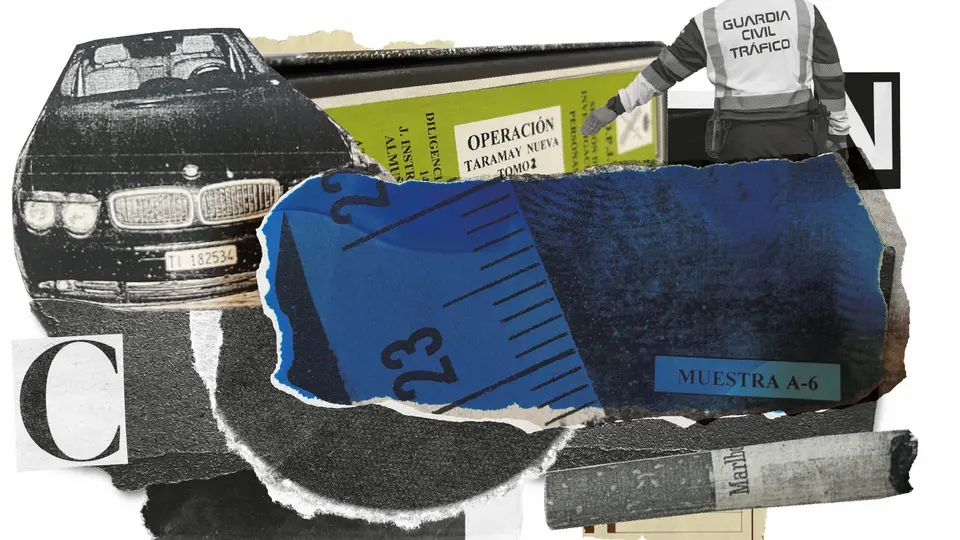
The deliberate hit-and-run that took nine years to reach justice
Rafael Peso was 33 years old, had two young children and a wife whom he adored when a driver deliberately killed him at a traffic control in Almuñécar. According to Ideal, the investigation that followed the homicide lasted nine years, spanned several countries and set a historic precedent in judicial collaboration between Spain and Morocco.
It was the early morning of 15 January 2005, approximately one o'clock, when a traffic patrol was conducting breath-test checks in Motril. Officers pulled over a BMW with Swiss registration plates. The vehicle did not stop: it accelerated and fled. The radio alerted other patrols. One of them, in Almuñécar, was under the command of agent Rafael Peso, from Palma del Río (Córdoba), stationed at the La Herradura post alongside his wife, also a member of the force.
The BMW appeared at high speed in the opposite lane to the one Peso occupied. The driver deliberately crossed into that lane and struck him at high speed. He then returned to his lane and fled. The Civil Guard flew over twenty metres. He died instantly.
Scarce clues and limited technical resources
Those involved abandoned the BMW in La Herradura. This provided an initial lead: they had needed another support vehicle to escape. The Civil Guard took over the investigation. They compiled images from security cameras at Motril Port and from two petrol stations, among other sources. The recordings showed three people on board the car. The vehicle's route pointed to the Campohermoso area, a locality belonging to Níjar (Almería), where the BMW had stayed the night before in an area inhabited mainly by Maghrebi immigrants.
"We're talking about 2005, which was already 21 years ago. The technical resources were nothing like what we have now," recalls the chief captain of the Judicial Police unit at the Granada Civil Guard post. "Nobody wanted to talk. It was very difficult to know who could have been driving the car," he admits.
The investigators carried out two exhaustive visual inspections of the vehicle. They obtained fingerprints and several pieces of evidence, including loose cigarette butts and a packet of Marlboro tobacco. They verified that this tobacco had been bought at a BP petrol station in Motril shortly before the hit-and-run. "They must have smoked those cigarettes from there to Almuñécar. And they appeared in the driver's area, which means he was the one smoking," explained the chief captain of the Judicial Police unit.
Years of investigation, false leads and discarded hypotheses
Months turned into years without the Civil Guard stopping their investigation. Countless sources were interviewed and names were continuously ruled out. Because it was a high-profile case, the unit received numerous reports from people who accused themselves or accused third parties. "They wanted to pin it on someone else," notes the chief captain. With a single hypothesis alone, officers spent months investigating before ruling it out.
The first turning point came thanks to a match in the French police database: the fingerprints found on the BMW matched an individual who used false passports and went by the name of Mehdi el Hadaf. "That didn't mean he was the one who ran over the Civil Guard. Besides, someone could have used the car beforehand and the fingerprints might not have belonged to the perpetrator," the chief captain clarifies. But the net was tightening.
The Marlboro butt that identified the culprit
The second turning point came in 2010, five years after the homicide. Police arrested a Moroccan man for arms trafficking. When his genetic profile was taken, the results matched the profile extracted from that cigarette butt found in the BMW. The person smoking that early morning, and therefore driving the car according to all the evidence, was Jalal Benabbou.
The next step was locating him. The investigators traced his presence from Málaga to Barcelona. They located him in Benidorm, where he supposedly lived under a false identity. The Civil Guard prepared an operation to detain him, but Benabbou moved to Elche and from there travelled to Morocco before they could capture him, according to information obtained through intelligence services.
Diplomatic pressure and a judicial precedent with Morocco
The next four years were devoted to pressuring Morocco to arrest Jalal Benabbou. The suspect was a drug trafficker with protection in his country. Spain had signed a bilateral agreement with Morocco that allowed crimes committed in Spanish territory to be tried there, and this was the moment to activate it. The Spanish Government initiated international pressure. "The work of María José, judge at the Instruction Court number 2 in Almuñécar, and Javier, judge in Denia, was essential," highlights the chief captain.
Jalal Benabbou was arrested in Morocco in 2014, nine years after Rafael Peso's homicide. A Moroccan court sentenced him to ten years' imprisonment. The ruling set a precedent in relations with a country that, according to the chief captain, "was not a collaborator". For the Civil Guard, which had lost a colleague at 33 years old, father of two young children and stationed in La Herradura alongside his wife, also an agent of the force, closing the case was, on a personal level, "complicated".
Source: Ideal