A faceless, nameless spy in Congress investigation commission
"The question was not whether there would be a jihadist attack, but when, how and where," says the former head of Spanish intelligence in Girona
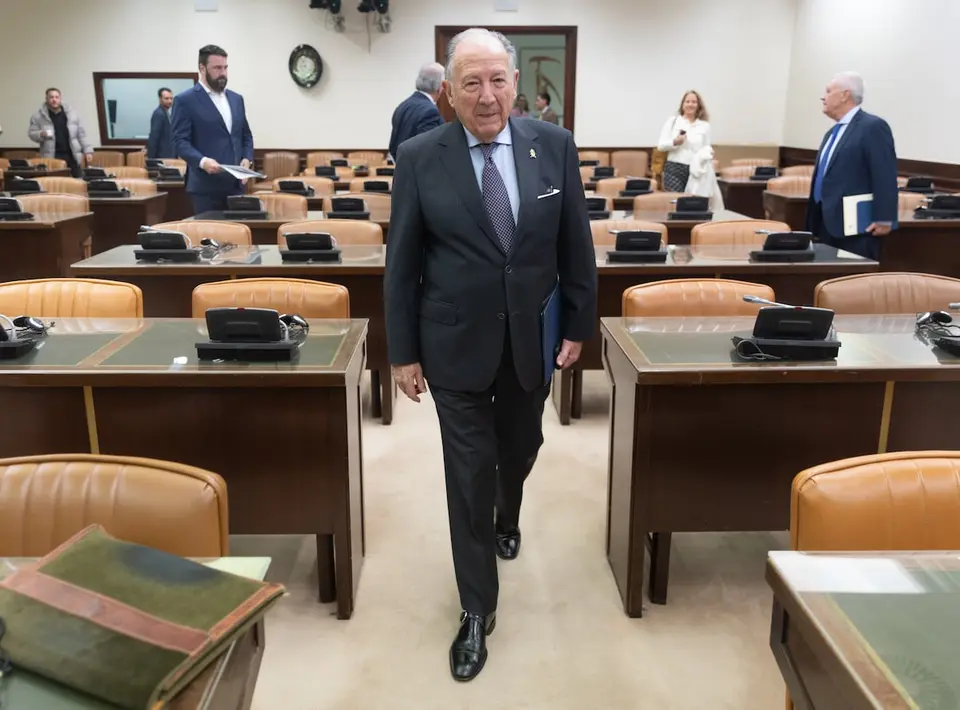
The spy without name or face who testified to Congress
A black screen and a distorted voice were all that MPs could see and hear on Tuesday at the parliamentary commission investigating the attacks of 17 August 2017 in Barcelona's Las Ramblas and Cambrils. According to El País, on the other side of that closed circuit was the former head of the National Intelligence Centre (CNI) in Girona province during the period when the Ripoll jihadist cell, which perpetrated the attacks leaving 16 dead, was formed.
It was not the first appearance by a CNI member before Congress. The organisation's top officials have testified repeatedly before the Reserved Funds Commission, behind closed doors, and the identity of director Esperanza Casteleiro and her deputy, secretary general Luis García Terán, is public. But this was the first time an operational agent whose identity is classified by law, and whose disclosure constitutes a crime, has done so.
The MPs addressed the witness simply as "agent". They did not know his name or his identification number. The only person to see his face was the Congress's chief legal officer, who received him upon arrival at the Palace of the Cortes and verified a CNI certificate attesting that the bearer was the person summoned by the commission. The detail has legal significance: the Penal Code punishes with up to one year in prison, or a fine of between 12 and 24 months, anyone who lies before an investigative commission. With his identity certified, the chief legal officer escorted the agent to a separate room from which he connected via closed circuit to the chamber where the MPs waited. The session was public, although an agent controlled access to the entrance.
The information published by Abc, catalyst for the summons
The appearance originated in two articles published by newspaper Abc in April of last year, when the parliamentary investigation seemed already exhausted. They claimed that Abdelbaki Es Satty, the Ripoll imam and leader of the terrorist group, "received 500 euros monthly from the CNI through its Girona office", and that after the attacks the head of that office, "a career military officer, was sent to the Spanish Embassy in Bogotá", as punishment and to distance himself from the case.
The agent denied both claims. He stated that the office he directed "had no contact of any kind" with Es Satty and that neither was any payment made from his "area of responsibility". To justify his possible ignorance of contacts maintained by other CNI units with the imam, he invoked the principle of "need to know", inherent to compartmentalised intelligence organisations, under which an agent only accesses information strictly necessary for their work.
According to his statement, he only learned of Es Satty's identity and of visits that CNI agents made to him in prison—where he was serving a sentence for drug trafficking—after the attacks, through a telephone call from the central headquarters of the espionage service.
"The question was not whether there would be an attack, but when, how and where"
The former CNI chief in Girona acknowledged that the attacks caused "great distress" in his office and that agents were "deeply affected", given that the terrorist cell had been formed within his own jurisdiction without being detected. However, he attributed that failure to the clandestine nature of the radicalisation process, which went unnoticed "under the radar of everyone, even among their closest social and family circle".
When referring to the climate prior to the attacks, he described a stage "hectic, with many investigations open" and numerous active alerts, although none related to Es Satty. "The question we asked ourselves was not whether there would be a jihadist attack, but when, how and where," he stressed.
Regarding his subsequent posting, the agent refused to confirm whether he was transferred to the Embassy in Bogotá or whether he has a military career, citing the secret nature of CNI service records. He did state that coordination with the State Security Forces and the Mossos d'Esquadra was "close and fluid" and that the independence process, which accelerated during those months, did not create operational discoordination. He also assured that all CNI documentation relating to the Ripoll imam has been declassified and is available to the commission.
Doubts among MPs at the end of the session
The appearance lasted for one hour. Upon conclusion, several MPs expressed doubts about whether to credit the agent's testimony. Without body language to guide them, some noticed other indicators: the former CNI chief in Girona systematically waited to hear the Spanish translation before answering questions posed in Catalan, which some interpreted as a strategy to gain time before responding.
Source: El País