Drugs and thefts: carabinieri commander's plan to tackle crime in Cremona
The new provincial commander of the carabinieri is focusing on prevention and institutional collaboration to address drug trafficking, fraud and thefts in the municipalities of the Cremona province.
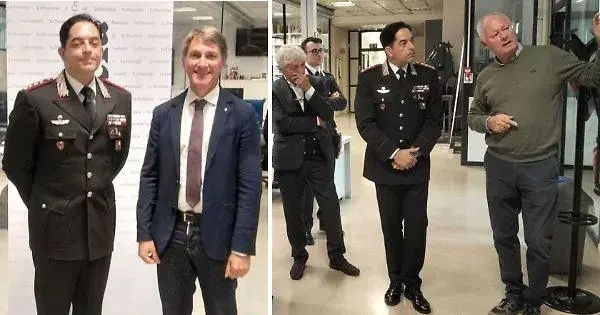
The new security plan in the Cremona area
According to laprovinciacr.it, Colonel Luca Vasaturo, the newly appointed provincial commander of the carabinieri, has outlined the criminal emergencies that require decisive intervention. Thefts and fraud, drug trafficking, youth disadvantage and infiltration of organised crime into the economic fabric represent the main challenges facing the territory. "It is a reality in which it is necessary to remain vigilant," Vasaturo stated approximately a month after his arrival in Cremona. The overall crime figures are falling, but certain forms of criminality continue to raise concern and require work that combines investigative activity with prevention and collaboration between institutions.
Fraud: sophisticated strategies against citizens of all ages
Fraud represents one of the emergencies on which the carabinieri are concentrating most heavily. The phenomenon affects people of all ages, but the elderly often prove more vulnerable. Fraudsters exploit surprise, fear and family ties, using increasingly sophisticated methods. Alongside traditional scams, technological tools are being used that allow a seemingly authentic number to appear on the victim's phone. The possibilities offered by artificial intelligence and calls from fake lawyers, carabinieri or revenue officers who suggest accidents or legal problems concerning a family member represent a growing threat.
"They are strategists; there is a well-studied psychological strategy," observes the commander. The victim is pressured and the phone may remain busy after the first call. The fundamental instruction is to interrupt the pressure and contact the emergency number 112, which is impossible to clone, and to avoid relying on contact details provided by whoever is asking for money or valuables. In case of suspicion, it is important not to hand over objects and not to make payments before verifying the situation through secure channels.
Alongside repressive activity, the carabinieri are strengthening prevention. Leaflets with practical advice drawn up by the General Command are being distributed with bills or at markets. A new project is also being added that aims to reach citizens in places of religious gathering. After contacts with the bishops of the two dioceses, the commander has promoted the involvement of parish priests and station commanders. The aim is to organise meetings in parishes and oratories, even after masses, to explain to the faithful how to recognise scams and how to respond.
Thefts in homes and businesses: organisation from outside the province
Among the crimes that cause greatest alarm are thefts in homes and businesses. The province of Cremona is an economically interesting territory even for groups arriving from other areas of Lombardy and from outside the region. "They are organised predators who choose the territory, strike and disappear," explains Vasaturo. Among the tools to focus on is technology. Number-plate reading systems are already widespread in the Cremona area, whilst their development is also planned in the Cremona province and, the commander hopes, in the Casalasco area. The objective is twofold: to preventively identify suspicious movements and to reconstruct, after a crime, the routes of vehicles to guide investigations. "It is certainly a strong deterrent," he emphasises.
The commander attributes part of the results in combating crime to the coordination achieved at the Prefectural office and to collaboration between law enforcement forces. The presence of the carabinieri is not limited to the three main urban centres of Cremona, Crema and Casalmaggiore: the territorial network consists of 27 stations, tasked with following small municipalities as well. In these areas the barracks represent the State and an essential point of reference. For this reason it is important to guarantee a concrete presence on the territory, also through foot patrols, and to value the direct relationship between military personnel and the community. "Trust cannot be virtual: it must be real," he states.
Drugs: the risk among the very young
Another relevant issue concerns the consumption and trafficking of drugs. Monitoring of the territory and investigative activities indicate a significant presence of substances, both light and heavy such as cocaine. What is particularly concerning is the age of those approaching drugs. "There is an approach to narcotics at a very young age, even at 13 or 14 years old," reports Vasaturo. A fact that makes it necessary to accompany investigations with preventive intervention aimed at adolescents. "If there is a supply it is because there is a demand," observes the colonel. A discussion has already been started with the Provincial Education Office, with the aim of organising an educational campaign in schools, particularly in classes most exposed to risk.
Gangs of minors: containment through collaboration
The commander has also addressed the issue of gangs of minors who in recent months had caused alarm in Cremona with assaults and robberies. According to Vasaturo, the phenomenon has been contained thanks to coordination promoted by the Prefectural office and collaboration between institutions. Joint management has made it possible to monitor the young people involved, identify them and refer them to the judicial authority, whilst maintaining close relations with the juvenile magistracy in Brescia. The response, however, cannot stop at repression. It is necessary to understand what lies behind deviant behaviour: family, social, personal or psychological difficulties. It is on this ground that prevention can intervene before situations deteriorate.
The carabinieri intend to strengthen relations with schools and welcome young people into barracks, together with teachers. The aim is to make known the activities of the carabinieri and reduce the distance between young people and institutions.
Source: Google News IT — Crime (it)