Father of slain environmental defender in Madre de Dios: "The State could have prevented my son's death"
Four farmers were sentenced to life imprisonment for the murder of Roberto Pacheco in 2020. His father denounces State failures and lack of protection for environmental defenders.
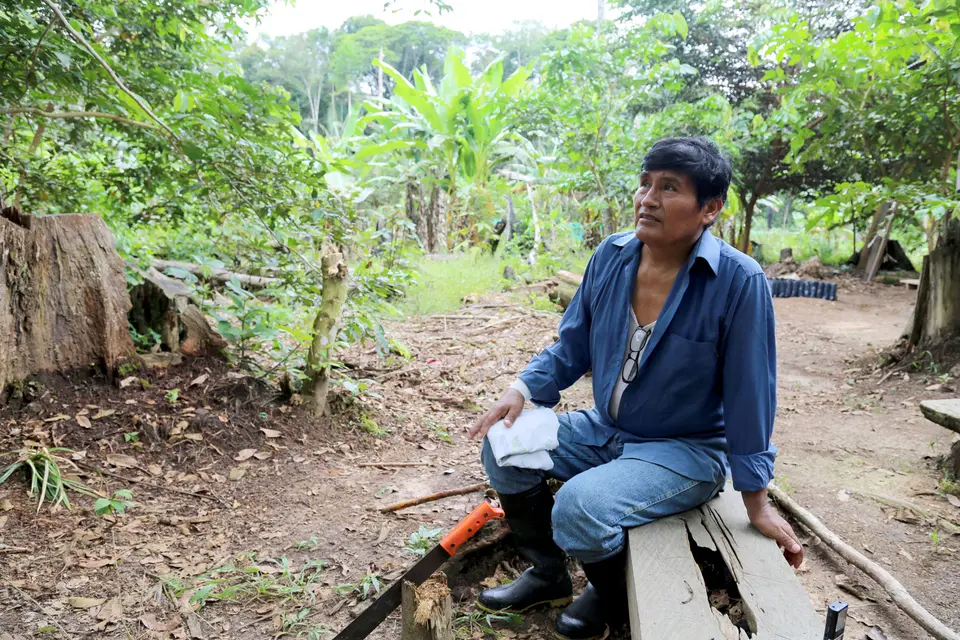
Life sentence for environmental defender's murder in Peru does not close wounds
Six years of bureaucracy, judge changes and procedural obstacles preceded the sentence. In early September, a Peruvian court sentenced four farmers to life imprisonment for the murder of Roberto Carlos Pacheco Villanueva, an environmental defender killed on 10 September 2020 in the Madre de Dios region of the Peruvian Amazon. According to es.mongabay.com, the sentence will not be executed immediately.
The convicted men—Hilario Mamani Churata, Leonidas Crisólogo Mujica Mayorga, Marwin Brandon Pinche Bautista and Rolando Becerra Rayme—were identified as intellectual authors of the qualified homicide. During the oral trial, all four remained silent and only at the final hearing declared themselves innocent. A fifth defendant, Junior Rafael Ortega Rodríguez, to whom the public prosecutor attributes direct execution of the crime, is at large and did not present himself before the court.
Roberto Pacheco, 34 years old, was helping his father Demetrio at a forestry concession located next to the Interoceanic highway, near the border with Brazil and Bolivia. Two gunshots ended his life. Both he and his father had reported death threats from illegal invaders entering the property, a concession that has been in Demetrio Pacheco's name since 1995 for the harvesting of Brazil nuts and other approved uses.
"Since 2020 I have not been able to be at peace"
In an interview with es.mongabay.com, Demetrio Pacheco described the judicial process as a succession of obstacles. Initially, the five accused received simple appearance orders and remained free during proceedings. The family appealed, requested the recusal of the judge in charge—a request that succeeded—and then discovered that the judge appointed as replacement had family ties to one of the defence lawyers. That judge resigned. The case was transferred from the local judicial district to Lima, where the prosecutor who conducted proceedings until sentencing was only then appointed. The oral trial began on 23 March.
"There is no justice for defenders," said Demetrio Pacheco. "I cannot move about freely as I did before. I have to keep my eyes everywhere, with security." That security, he clarified, only arrived after his son's murder and after publication by a media outlet, not as a preventive measure by the State.
Civil reparation of 60,000 soles: "I do not know how they value my son's life"
The sentence includes civil reparation of 60,000 soles—approximately 17,400 dollars—for Roberto Pacheco's relatives. His father rejected that figure. "There are four children who have been left as orphans, boys, and 60,000 soles is nothing," said Demetrio Pacheco, who indicated he would analyse with his lawyer whether there was a way to appeal that amount.
Roberto had a wife, four children and, according to his father, a conservation vocation that developed from his youth. Demetrio Pacheco recalled that at 18 years of age his son observed how an indigenous community harvested ungurahui fruit without felling the palm tree, and from that moment he dedicated his life to the protection of nature.
The concession remains under threat
The Pacheco family's forestry concession faces a parallel dispute. Since 2012, two agricultural associations entered the property. The case has about 14 people charged, and only in September an Environmental Court issued a notification requiring Demetrio Pacheco to appear. The activity threatening the reserve is, according to him, land clearance with the aim of changing land use: from forest management to agricultural plantations, an activity prohibited by Peruvian law without express permission from the forestry authority. The associations operate clandestinely, without enabling documentation.
"How not to issue a precautionary measure on the court's own motion paralyising all such activities?" Pacheco questioned. "They are organised, they are agricultural associations, but everything is done clandestinely."
"The State could have prevented my son's murder"
The central question that Demetrio Pacheco has been asking for six years points directly at the Peruvian State. "The State could have prevented my son's murder if it had acted against strangers illegally entering the forest reserve," he stated. "If these authorities had acted at the appropriate time, stopping this illegal activity, this would not have happened, and how many other deaths could have been prevented."
During the course of proceedings, the pressure generated by the case contributed, according to Pacheco, to the creation of a Human Rights Prosecutor's Office in Madre de Dios. For him, that institutional consequence does not compensate for the loss, but it does reflect that cases such as his son's can force structural changes. He now hopes the sentence will serve as a precedent for other environmental defenders in the Amazonian region.
The life sentence is final in the first instance, but the sentence is not immediately executed, which means that the legal process for the four convicted men continues its course through the Peruvian justice system.
Source: Google News PE — Crime