Dr Gładyś from Warsaw University of Technology disappeared after testifying at CBA the day before
Dr Sylwester Gładyś, a lecturer at Warsaw University of Technology, went for a walk in Młociński Park in February 2026 and did not return. The day before, he had testified at the CBA regarding the re-privatisation of Warsaw properties.
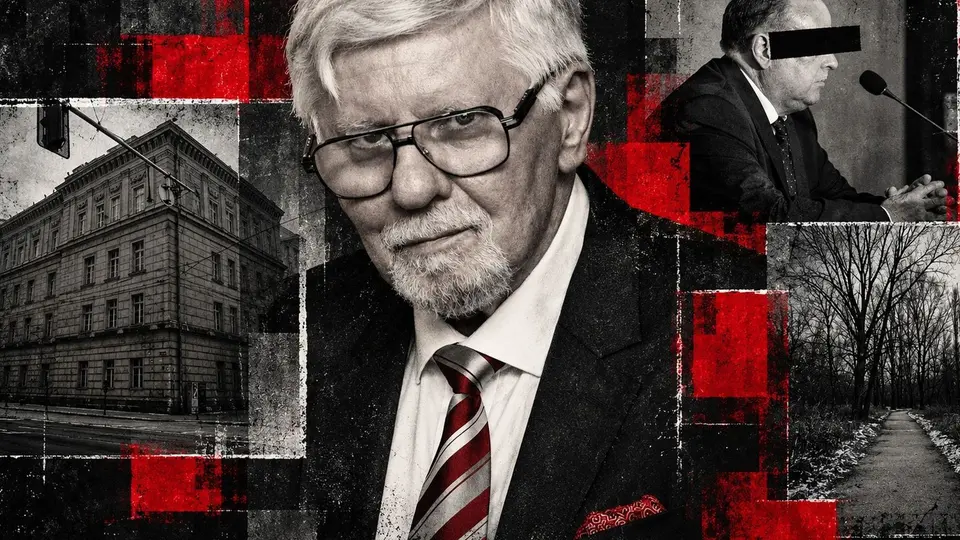
Scientist vanished without trace
Sylwester Gładyś, a long-time lecturer at Warsaw University of Technology, left his apartment in Warsaw's Bielany district on 24 February 2026 shortly before 4 p.m. On his desk remains a computer with a lecture he was working on. The balcony door is open. Following his recurring Tuesday routine, he takes his trekking poles and puts a swimming bag into his car – shortly after his walk in Młociński Park he plans to go swimming.
His phone last logs into the network at 17.28 in the area of the park. There are no further logins after that. None of the surveillance camera footage analysed later shows the scientist leaving the park. To this day, nobody knows what happened during that hour.
He testified at CBA the day before
According to wiadomosci.wp.pl, the day before, on 23 February, Gładyś was summoned to the capital branch of the CBA. The questioning concerned an investigation by the Regional Prosecutor's Office in Wrocław, which covers Warsaw re-privatisation and numerous properties in the capital, including plots at Pańska Street 80 and 82.
Officers questioned him primarily about a power of attorney he was said to have granted to Jacek Ż. – the cousin of the doctor's former wife, who had represented the family for years in the matter of property restitution. They were particularly interested in whether the scientist had signed a specific power of attorney before a particular notary. Gładyś told his family and acquaintances that he saw this document for the first time and announced that he would go through his materials to reconstruct the course of events more accurately.
That same day he sat down with his meticulously kept calendar of many years. On the page he writes "power of attorney without sale" along with the document number from 1999, dates, names and the notary in Raszyn. The handwriting is uneven – Parkinson's disease made handwriting difficult for him. One of the last sentences he wrote was one without any explanation.
The Prosecutor's Office does not link the disappearance to the investigation conducted by the CBA.
Search in the park
His phone does not answer on Tuesday evening. It does not answer on Wednesday either. Gładyś's family is scattered – some members live outside Warsaw. On Friday 27 February, one of his relatives goes to his apartment with keys. The apartment is empty.
The police report is not initially treated seriously. A man with an illness is independent – he could have gone somewhere. News of the disappearance spreads quickly online. On Saturday relatives, students and scouts search Młociński Park, Bielany Forest and neighbouring areas of Warsaw. They find no trace.
The family collects surveillance footage from the area. From the compiled materials a picture emerges: the scientist entered the park but did not leave it. Only then does a police search team become involved in the search.
Six days after his disappearance, on Sunday 1 March, dogs trained for search and rescue are brought in. They pick up a scent and lead to a cliff directly above the river. There the trail ends. Dogs trained to find bodies, released into the forest, indicate nothing.
Police speak of suicide
From the beginning, the police lean towards a version related to suicide. They present the family with a scenario: the scientist sat on a bench, reflected on his life, and when the sun set, went to the river. He was ill, it was difficult for him. He did not say goodbye, because people sometimes do not say goodbye.
Those close to the missing man think differently. "It is obvious that people commit suicide. But who jumps from a three-metre cliff into a river? Despite Parkinson's disease, which thanks to medication was not very burdensome, he was aware of his capabilities. He would not have approached the very edge. This was a man who climbed Mont Blanc, Kilimanjaro. I do not believe that a small cliff over the Vistula took him," says someone from the closest circle of the family.
The missing man's daughter adds: "If he had wanted to go his own way, he would have left things arranged for us, a letter, something. He would not have vanished, leaving us with a puzzle."
Missing details
When taking walks Gładyś usually did not put trekking poles on his wrists, but on that day he had them with him. Had he fallen into the water, at least one should have remained on the shore or been washed out by the river. Neither the poles nor the cap nor any other elements of clothing were found. Most bodies that surface from the Vistula lose their jacket and other parts of their clothing. Even if the poles had been strapped to his wrists, they would have come off first.
In the house remained a computer switched on with an open lecture, tea in a glass, Parkinson's medication on the desk. Everything indicated that he was to return shortly. His 71-year-old body, 185 cm in height, in a red jacket with yellow lettering, was never found.
Source: Google News PL