Marlaska calls for EU ban on drug-trafficking speedboats following death of two Civil Guard officers in Huelva
The Interior Minister proposes at the MED9 summit in Croatia a European prohibition of drug-trafficking speedboats. Spain banned them eight years ago.
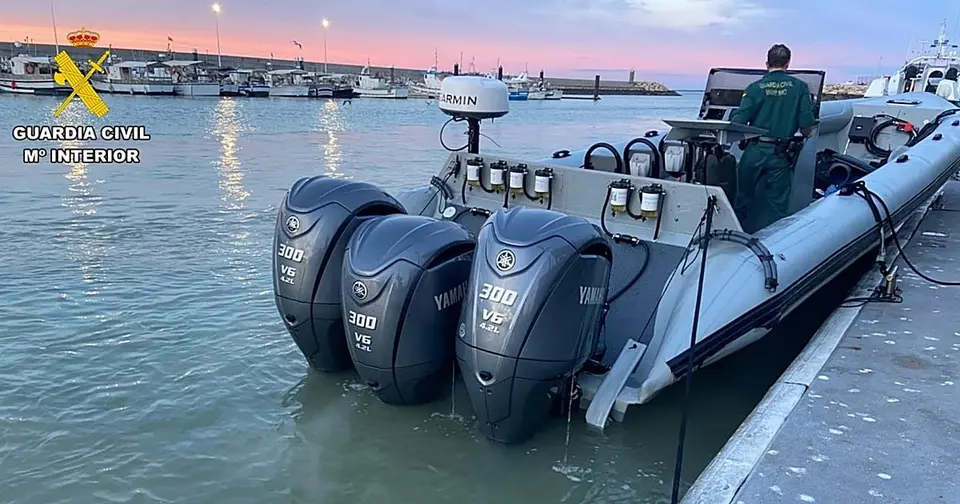
Marlaska brings speedboat ban to European debate following Huelva tragedy
Two Civil Guard officers, Germán and Jerónimo, died in the line of duty during an operation against drug trafficking in Huelva when they collided with a drug-trafficking speedboat during a pursuit. According to ABC, Andalusia remains shocked by their deaths, and indignation has spread among State Security Forces and Bodies and across society as a whole.
The main figure targeted by public opinion is Interior Minister Fernando Grande-Marlaska, who was booed during his recent visit to Úbeda. In response, Marlaska has brought to the European forum a specific request: the prohibition and prosecution of drug-trafficking speedboats throughout the European Union.
The proposal at the MED9 summit in Rovinj
Grande-Marlaska put forward the initiative on 18 and 19 May during the MED9 summit held in Rovinj, Croatia. The MED9 is an alliance founded in 2013 that brings together nine southern European member states with Mediterranean coastlines: Cyprus, Croatia, Slovenia, Spain, France, Greece, Italy, Malta and Portugal. Croatia organised the meeting within the framework of its upcoming presidency of the group.
"A ban across the entire EU would help disable the use of fast boats, and should also extend to other associated practices, such as the illegal supply of fuel on the high seas to this type of vessel," the minister said to his Mediterranean counterparts.
Marlaska justified the measure by arguing that it is a problem "that requires solutions that go beyond the capacity of a single country". Spain established the prohibition of these vessels eight years ago, but the Government considers the national framework insufficient given the cross-border dimension of maritime drug trafficking.
Over 600 suspected drug-trafficking speedboats and increased aggression
The annual National Security report, published shortly after the death of the two officers, documents a situation that the Police and Civil Guard had already been warning of. Police pressure on the Strait of Gibraltar has displaced drug-trafficking speedboat activity along the entire Cádiz coast, the Huelva coast and the Guadalquivir river. The document records over 600 suspected "go-fast" type vessels and notes increased aggression by drug traffickers towards Security Forces, including the use of military weapons.
Although drug-trafficking speedboats are banned in Spain, Portugal—a neighbouring country and MED9 member—is one of the territories where they are manufactured clandestinely and sold at prices that can reach 350,000 euros per unit.
It should be noted that it was Marlaska himself who did not appear before the European Parliament's Petitions Committee at the end of January, as part of the investigation opened following the death of two other Civil Guard officers in Barbate in 2024.
Secondary ports, rivers and tracking the money
In his address in Rovinj, the minister emphasised the need to strengthen surveillance of secondary ports and rivers as a central axis of anti-drug operations, noting that drug trafficking "no longer affects only major ports and cannot be measured solely by the volume of seizures".
Grande-Marlaska also urged action "against the logistical facilitators of drug trafficking", a category which he included the trade in vessels, engines, fuel, communications and financing. He also called for "following the money trail, including crypto-assets", in line with what he had already proposed on 20 April in Paris, during the sixth meeting of the European Countries Coalition Against Organised Crime.
The minister thanked his counterparts for the condolences received over the death of the two Civil Guard officers in Huelva and agreed with them on the need for "global" strategies against "a transnational threat that is adaptive and integrated in global logistical chains".
Joint declaration and upcoming commitments
The summit concluded with the adoption of a joint declaration in which the nine countries reaffirm their commitment to the effective management of external borders and to the implementation of the Migration and Asylum Pact, which will come into force on 12 June under the principles of solidarity and shared responsibility.
On internal security matters, the signatories committed to strengthening port protection, boosting intelligence sharing and promoting the use of advanced technologies in coordination with European agencies. The document also calls for "adequate funding" from the EU to meet the security challenges facing the Mediterranean region.
Source: ABC