Lille-English Channel drug trafficking network: seven-year prison sentence upheld on appeal
An organised network based in Lille distributed over 50 kilograms of drugs via Snapchat in the Cotentin region. One of the two main traffickers sees his sentence increased to seven years on appeal.
Traffic controlled via Snapchat and delivered by train to the Channel
According to actu.fr, a drug distribution network organised from the Lille region to the Channel distributed over 50 kilograms of illicit products between January 2025 and March 2026. Customers placed orders through a Snapchat account; deliveries were then made by train or car to Cherbourg and Valognes, where the drugs were resold.
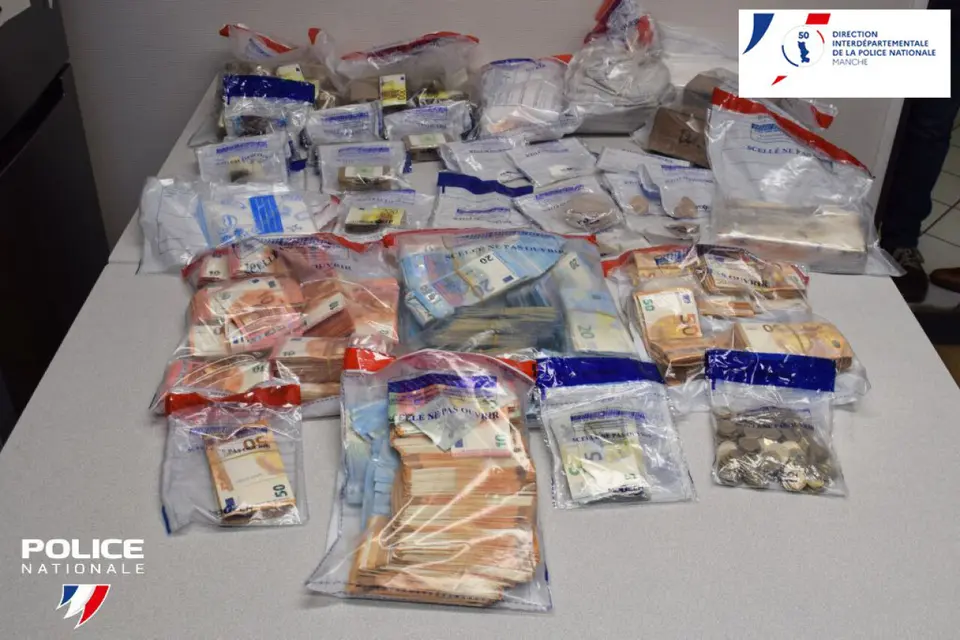
A police operation carried out on 29 March 2026 made it possible to dismantle the network. Investigators seized 4.2 kilograms of cocaine, 6 kilograms of heroin, 4 kilograms of cannabis and 128,000 euros in cash. Approximately 86,000 euros additional were discovered in an apartment rented on Airbnb on rue Émile-Zola in Cherbourg. The traffic is believed to have generated between 800,000 and 1 million euros in revenue.
Initial convictions and appeals
In May 2026, the Cherbourg criminal court had convicted six people involved. A 30-year-old woman with no prior convictions received three years' imprisonment for managing sales points and deliveries. Another 20-year-old woman from Cherbourg was also convicted; neither of the two lodged an appeal.
The two main protagonists, both aged 21, contested their conviction. At the appeal hearing held in Caen on 2 October, the first — a resident of Lille — acknowledged his participation in the trafficking but disputed having directed the network's establishment in the Channel. His lawyer raised the absence of signs of remarkable enrichment: no photographs of travel or bundles of notes on his telephone corroborated the leadership role attributed to him.
The second defendant was prosecuted for attempted establishment of the network in Coutances. The hearing was suspended due to his condition, his remarks having been described as incoherent. His defence requested an immediate psychiatric examination and his release; these requests were not accepted.
Sentences increased on appeal
The advocate general had requested nine years' imprisonment against the first and six years against the second. The court of appeal handed down shorter sentences. The man from Lille, initially convicted to five years at first instance, sees his sentence increased to seven years' imprisonment. The second was sentenced to five years, one of which suspended, making four years' imprisonment — identical to his previous conviction. Both men were remanded in custody.
Source: Google News FR — Crime (fr)