Firebombing attack in Thessaloniki: Counter-terrorism police seek "mastermind" and "ground zero"
Counter-terrorism analysts are focusing on a pool of 30-40 anti-establishment activists and monitoring camera footage to identify the three perpetrators and the organiser of the attack.
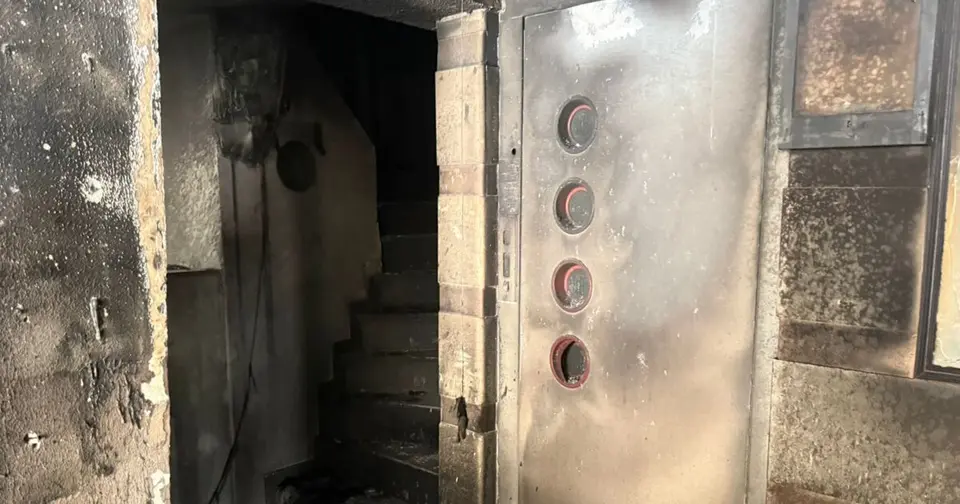
Counter-terrorism: Perpetrators' trail leads to "ground zero"
Counter-terrorism analysts are searching for the perpetrators of the deadly firebombing attack within a pool of 30 to 40 anti-establishment activists who have participated in similar attacks using petrol bombs, occupations and incidents in Thessaloniki, according to Newsit.gr.
At the same time, authorities are focusing on the "guiding mind" — the person who selected the targets, planned the attacks and directed the three young perpetrators.
Two privately-owned motorcycles and concealed features
Based on evidence gathered so far, counter-terrorism officers conclude that the three perpetrators used two privately-owned motorcycles, which have not been located — which is why they did not burn them after the attack. Camera footage shows that they had their characteristics concealed and did not carry mobile phones with them.
The organiser and the three young men organised the deadly attack with every detail. However, police officials say they are confident that the perpetrators made a "fatal mistake" that will lead to the revelation of their identities.
"Ground zero" and the escape route
A central focus of the investigation is locating "ground zero" — the perpetrators' final destination after the attack, where it is believed they hid the motorcycles and concealed themselves in a safe-house apartment. Upon leaving the attack sites, they moved along a predetermined route via specific streets.
Authorities believe that by following the route through camera footage, they will reach the final destination. A second layer of investigation is examining the possibility that the perpetrators removed their helmets there and a camera captured their faces — or that they headed to a specific apartment in a residential building. The address of this house, when located, is estimated to lead to the perpetrators' identities.
Forensic examinations and DNA
Remains from the three firebombing devices, which consisted of a medium-sized petrol bomb and a can of petrol, have been sent to forensic laboratories. To date, no fingerprints have been found, while the remains are essentially ash that makes DNA detection difficult.
Specialists believe, however, that there may be a spot that was not completely burned, where a DNA trace from the maker or the person who placed the improvised devices could be found.
Mobile phone antenna sweeping
At the same time, mobile phone antennas in the area are being scanned to locate signals, primarily at the starting point and final destination of the three young men. Initial evidence shows that the perpetrators did not carry mobile phones or had them switched off during the attack.
However, it is not ruled out that they activated their phones after the attack ended, thus leaving traces of their movements. This process of locating such signals is time-consuming and is expected to be completed in the coming days.
Overall, authorities are searching for both the "mastermind" who designed the devices and selected the targets, as well as the three direct perpetrators who placed the petrol bombs.
Source: Newsit.gr