Cyberattacks on supermarket refrigerators: from Sweden to Kifissia
Hackers gained remote control of cooling systems in six European countries, causing damage worth millions. A butcher's shop in Kifissia was among the targets.
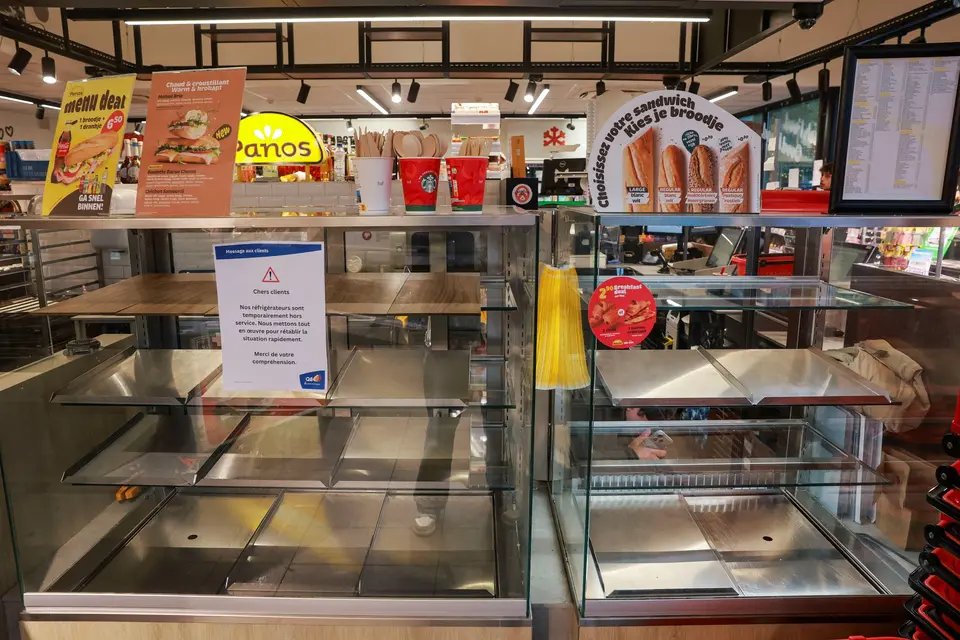
Hackers "raised" the temperature of refrigerators in Greece and Europe — damage worth millions
Refrigerators and freezers in supermarkets and smaller businesses in at least six European countries became targets of cyberattacks, resulting in the destruction of large quantities of food and damage worth millions of euros. According to In.gr, the incidents involved countries ranging from France and the Netherlands to Sweden and Greece, where hackers gained remote access to temperature control systems.
Refrigerators at 50 and 150 degrees
In one of the most characteristic incidents, refrigerators in a Swedish supermarket were set to 50 degrees Celsius. In Kifissia, hackers raised the temperature of a butcher's shop refrigerator to 150 degrees Celsius.
The shop owner, Georgos Boumpas, stated that the problem was initially detected by employees, who begin their shift at 4 in the morning. It took approximately two hours before a technician regained control and restored the settings. According to Boumpas, a similar problem was faced during the same period by a supermarket and a fast-food shop in the same area.
"The main problem is with new-technology refrigerators, which operate via wireless Wi-Fi to provide temperature readings at all times both to us, to our mobile phones and to the technician who manages the shops," he explained. "We have disabled the Wi-Fi and we will see what else we can do to take some security measures."
Six countries, hundreds of shops
On Monday, 2 November, supermarkets in Sweden, Belgium, Luxembourg, Ireland, Italy and Estonia reported problems almost simultaneously. A few weeks earlier, similar incidents had been recorded in hundreds of shops in France, Belgium and the Netherlands. Investigations by the authorities are ongoing, with the central questions being how access to the devices was obtained and who is behind the attacks.
French cybersecurity authorities attributed the problems to older remote control units from Danish company Danfoss and American company Copeland. Danfoss clarified that the affected systems were older models, which were no longer receiving software and security updates. Copeland identified a security vulnerability in controllers that have been withdrawn from circulation.
"A refrigerator doesn't look like a threat"
Cybersecurity experts emphasise that the incidents highlight the risk associated with the ever-increasing connectivity of devices to the internet.
"This particular attack is a warning bell. We have filled our homes and shops with devices that are actually small computers, but we continue to treat them as ordinary household appliances," said Katerina Mitrokotsa, professor of cybersecurity at the University of St Gallen in Switzerland, to PBS. "A refrigerator doesn't look like a threat to security and that is precisely why it makes an attractive target for attackers," she added.
Mitrokotsa explained the reasoning behind the interconnection: "Supermarkets connect their refrigerators to the internet so they can monitor temperatures in hundreds of shops twenty-four hours a day, receive notifications before food spoils, reduce energy costs and give technicians the ability to repair any faults remotely. However, every refrigerator that is connected to the internet can become an entry point for a cyberattack."
Old equipment, new vulnerability
Nicole Carinion, senior vice president of strategic security and artificial intelligence at cybersecurity company Darktrace, emphasised that the attacks were not based on unknown zero-day vulnerabilities. "The intruders gained access through controllers that were exposed to the internet, obsolete software that was no longer supported and default passwords. It is the result of the accumulation of technical debts that are now returning as a problem," she stated.
According to experts, many businesses adopt new technologies quickly, leaving secondary systems on which their daily operations depend — payment systems, warehouses, refrigeration facilities and building automation systems. "Organisations invest large sums in artificial intelligence and digital transformation, whilst the systems that keep food cold, water clean and lights on continue often to operate with equipment for which funds have not been allocated since the day of its installation," Carinion noted.
British warning on outdated technological equipment
On 3 November, British cybersecurity authorities released limited information about the latest attack, emphasising the risks from the use of outdated technological equipment. British Minister for Cybersecurity Liz Lloyd mentioned in a speech that "the cyberattack on French supermarkets was the result of the exploitation of known vulnerabilities," characterising it as clear evidence of the need to strengthen digital security in the retail sector.
Source: In.gr