Money laundering through utility providers: the stages and red flags
The Money Laundering Authority detected an organised method of legalising illegal funds through overpayment of utility bills.
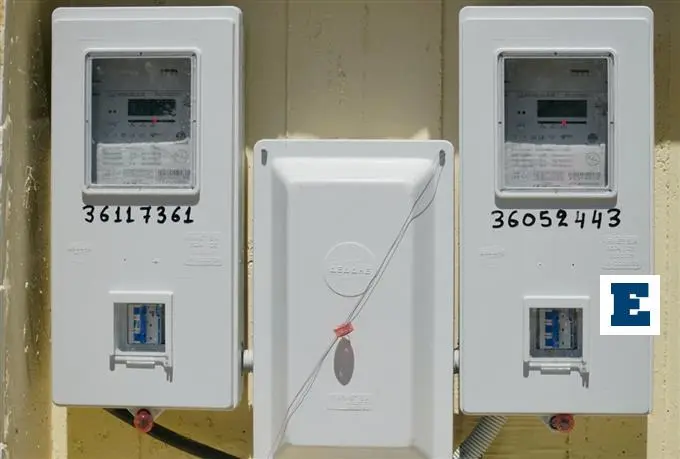
Illegal funds 'cleaned' through electricity and water accounts
The Authority for Combating Money Laundering from Criminal Activities has identified an organised money laundering system that exploits utility service providers, according to Ethnos. The method is based on the creation of credit balances through unjustifiably high payments, which are subsequently returned as 'legitimate' refunds to bank accounts.
How the system works
The Authority's First Unit analysed a series of cases and identified a specific sequence of actions. Natural persons presented as residents of Greece enter into contracts with utility providers based on property rights — either as tenants or as owners. In many cases, the same persons contract simultaneously with multiple companies for services on multiple properties.
They then make payments of unjustifiable amounts — repeated and disproportionate relative to debts or consumption — via cards and financial instruments held mainly in institutions outside Greek territory. Thus large credit balances accumulate in the utility providers' customer accounts.
The final step is critical: the 'customer' requests the return of the amounts to bank accounts — usually different from those used for the initial payments — held as a rule in Greek credit institutions. The funds now appear as money refunds (refund) within the framework of ordinary transactions, acquiring a 'legitimate-looking' path into the legitimate economy.
In several cases, the same bank account received refunds from multiple different providers. The utility companies are used unknowingly as 'intermediate entities'.
The source of the funds
In all the investigated cases, the credited funds could not be justified on the basis of the tax or broader economic position of the persons involved and are considered of suspicious origin. In certain cases, the money came from frauds committed mainly through the banking system. The phenomenon is characterised by the Authority as 'exceptionally organised', with a specific preparatory procedure and the aim of misleading financial institutions.
Risk indicators (red flags)
The Authority recorded specific 'red flags' that can be utilised both by credit institutions and by the utility providers themselves. Individually, some are not always sufficient — in combination, however, they make scrutiny necessary.
The main indicators are:
- Payments to providers without corresponding debt.
- Unusually high amounts per transaction relative to consumption or debt.
- Particularly increased payment frequency that does not follow usual payment deadlines, but resembles deposits.
- Use of different financial instruments per transaction — the risk increases when this tactic is repeated for each payment.
- Financial instruments held in institutions outside Greece.
- High accumulated credit balance in customer accounts.
- Requests for refund of amounts paid without due cause.
- Refunds to different accounts from those that made the initial payments.
- The same bank account receives multiple refund credits from different providers within a short time period.
- Income that does not correspond to the tax or economic position of the beneficiary.
Call for systematic monitoring
The Authority emphasises that this methodology shows increasing frequency and 'requires systematic study and analysis by the competent authorities'. The aim is to improve detection mechanisms and take the necessary preventive measures. Credit institutions falling under Law 4557/2018 are called upon to utilise the indicators for implementing additional preventive measures, whilst utility service providers are called upon to prevent the misuse of their products and services.
Source: Ethnos