Man arrested on suspicion of plotting attack against Tusk and Polish defence minister
Polish police have detained a man accused of threatening to carry out an attack against Prime Minister Donald Tusk and Defence Minister Wladyslaw Kosiniak-Kamysz. The arrest follows an intelligence alert about possible assassination plans.
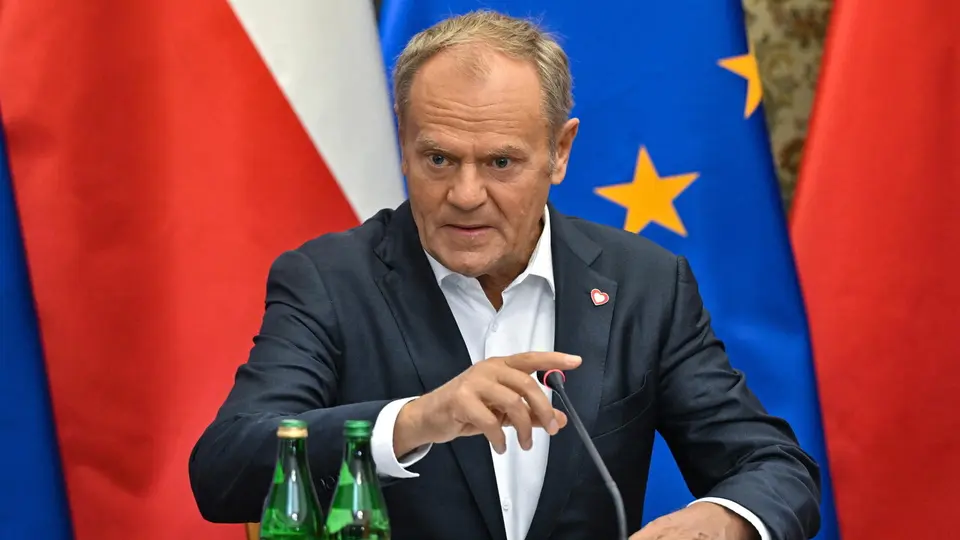
Arrest for threats against Polish leaders
According to ansa.it, Polish Prime Minister Donald Tusk announced the arrest of a man accused of threatening to carry out an attack against him and Defence Minister Wladyslaw Kosiniak-Kamysz. Tusk posted a statement on X, praising the police for their "swift and decisive action". Polish Interior Minister Marcin Kierwinski confirmed the arrest on the same social network.
The operation followed an alert from Polish intelligence services. The Interior Ministry in Warsaw had previously announced that the services had received information about an alleged plan to assassinate Tusk and Kosiniak-Kamysz. In response, the Interior Minister and the coordinator of special services ordered the implementation of security measures.
An emergency meeting has been convened for today at the counter-terrorism centre of the Internal Security Agency (ABW), according to ministry spokesperson Karolina Galecka. The meeting will bring together Polish authorities to assess the specific threats that have been received.
International context of threats
Western intelligence agencies have raised an alarm about the growth of Moscow's attempts to target European defence officials. According to the Financial Times in conversations with officials from five different agencies, business executives and senior employees have become targets of Kremlin agents.
However, informed sources contacted by ansa.it have clarified that no specific alert in line with what the Financial Times reported has ever been received through diplomatic, military or intelligence channels between states. The sources emphasise that what was described by the newspaper represents a generalisation of generic alerts about possible scenarios, considered by the international community since the beginning of the Ukrainian conflict more than four years ago, without ever being underestimated.
The role of Russian GRU and operational methods
According to Western intelligence, responsibility for these plots, defined in Russian parlance as "wet work"—violent operations, particularly contract killings—rests largely with the GRU, the Russian military intelligence service. The GRU is adapting its methods, collaborating increasingly closely with organised crime groups and using networks of agents operating beyond national borders.
The organisational structure has changed. Instead of relying on individual "expendable" agents recruited online in exchange for money, the GRU divides reconnaissance, logistical, planning and execution activities among different cells or individuals. In some cases, plots already in operational phase have been identified and foiled. In others, suspicious activities have been detected, including forms of surveillance aimed at reconstructing the daily habits of targets, at their homes and in their workplaces.
Psychological effect as strategic objective
European security officials have emphasised that a central element of Russian strategy is that assassination attempts do not necessarily need to be carried out for the campaign to produce the desired effects. An intelligence official stated: "From the Russian perspective, the main objective remains psychological. It is enough to make people believe they could become a target to achieve the desired effect. They want individuals to think twice before doing business with Ukraine."
Several European defence sector executives have strengthened their protective measures in recent months on the specific recommendation of government security services. Germany's internal intelligence service (Bundesamt für Verfassungsschutz, BfV) has significantly intensified contact with personnel and executives of German defence companies, going so far as to recommend the use of private protection teams. Some executives adopt such measures only when travelling abroad.
Source: Google News IT — Crime (it)